Thanks for your patience during our recent outage at scalar.usc.edu. While Scalar content is loading normally now, saving is still slow, and Scalar's 'additional metadata' features have been disabled, which may interfere with features like timelines and maps that depend on metadata. This also means that saving a page or media item will remove its additional metadata. If this occurs, you can use the 'All versions' link at the bottom of the page to restore the earlier version. We are continuing to troubleshoot, and will provide further updates as needed. Note that this only affects Scalar projects at scalar.usc.edu, and not those hosted elsewhere.
Early Indigenous Literatures
Main Menu
The Child Who Would be Sovereign: Settler Colonial Frustrations and the Figure of the Child in Gertrude Simmons Bonnin's American Indian Stories
By: Kai Chase
Illicit Relations: The Challenges and Possibilities of Black and Indigenous Relations
soumya rachel shailendra
Legibility and Ambivalence in 19th Century Indigenous Women's Writing
An exhibit on E. Pauline Johnson and Sarah Winnemucca by Emma Cohen
Lyric Histories: An Investigation of Early Black (and) Native America through Poetic Vignettes
by Kira Tucker
Marriage and Empire in 19th Century Native American Women's Literature
by Angad Singh
Not-not blood quantum: the Dawes Act and ambivalent Indigeneity
by Yasmin Yoon
Reading Indigenous Authorial Presence in 18th- and 19th-century Paratexts
Title Page for Isabel Griffith-Gorgati's Exhibit
Resistance on and off the Page: A Collaborative Conversation between Black and Indigenous Literary Contributors
Featuring James Printer, Katherine Garret, Phillis Wheatley, and John Marrant (17th-18th Century Early Print Culture Participants)- By Lauren Johnson
Spiritual Armies, Resurrected Bones, and “Boundless” Continents: How Indigenous Activists in Early New England Reconfigured Puritan Millennialist Narratives
Featuring texts of Samson Occom, William Apess, and the Wampanoag Bible. By Surya Milner
Sovereignty or Removal: The Conflicting Indigenous Policies of 1835 in the Continental United States
Julia Gilman
What Does Water Do For Indigenous Peoples of the Great Lakes Region?
Featuring Heid E. Erdrich, Simon Pokagon, Black Hawk, and Simon Kofe by Sarah Nisenson
(Re)introducing Black Hawk and The Life (1833)
BHR 1-Intro
Yasmin Yoon
f7f231e474bf43796f973cd0ee560919050f7427
Lydia Abedeen
321b94302eca10e499769fd0179e64cd33bc4cd5
Kira Tucker
acf97d948460e98cd439646cc2db7ae17c5ebd9d
sarah nisenson
7cb5d2c1682fbd145e76716f3924f03bf25c616a
Kai Chase
d7cab5968a3a916efd1a14a48cc4832d5d5514ae
Soumya Shailendra
86c246fcc4aea83787381bffd2b839885bef5096
Bennett Herson-Roeser
c8289125445a56c819045a0091daf0402b3e0875
Surya Milner
077f837f3d662fd5ef9055f8258e5c47bb11f714
Julia Gilman
b860a8277eea484f91a1a9e0423cab4b52bae522
Lauren Johnson
98dac03e7c9c1ad41e1c0a8583704e55802f98ba
Angad Singh
d2b8d1d68ec374981c9e99b7cb400803bc678231
Emma Cohen
146e757b9fc3b3b416edecbf79592e8d743d4ba1
Charlotte Goddu
2d4c020870148128c7824ece179e04cffe180d95
Isabel Griffith-Gorgati
985a05928a67a856791fffac3dbba8acc85f6f37
Authorpic3
1 media/Winnemucca_thumb.png 2022-12-07T00:07:41-08:00 Angad Singh d2b8d1d68ec374981c9e99b7cb400803bc678231 41696 1 Winnemucca plain 2022-12-07T00:07:41-08:00 Angad Singh d2b8d1d68ec374981c9e99b7cb400803bc678231This page is referenced by:
-
1
media/Johnson.png
2022-12-06T22:31:10-08:00
Marriage and Empire in 19th Century Native American Women's Literature
29
by Angad Singh
plain
2022-12-08T20:22:08-08:00
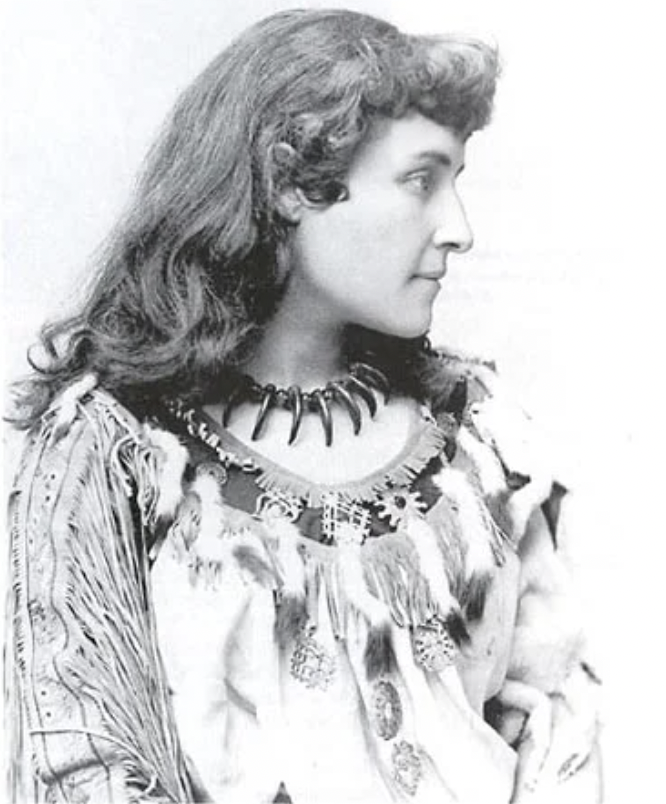
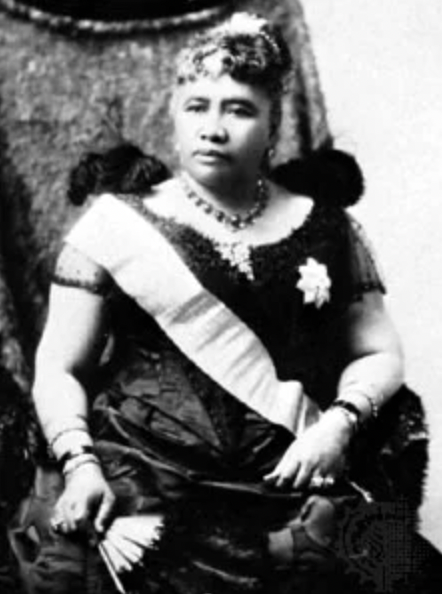
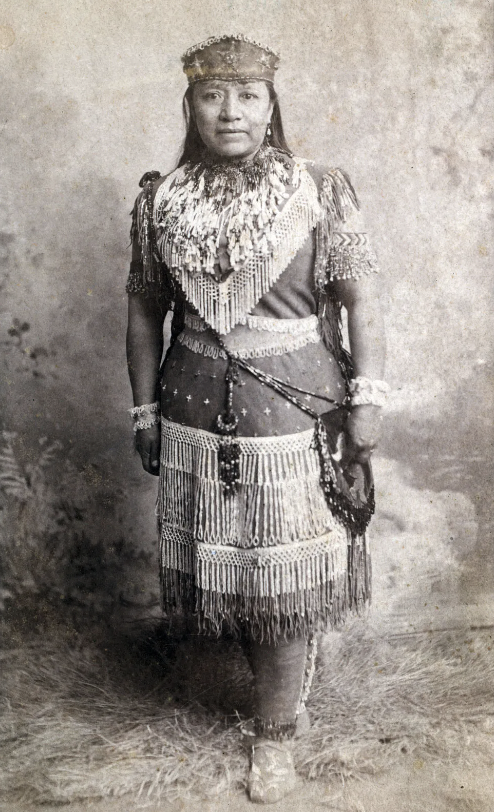
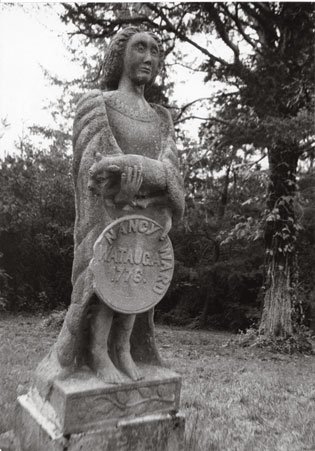
This exhibit puts in conversation four Native American women writers from the nineteenth century: Kanaka Maoli Queen Liliuʻokalani, Paiute Sarah Winnemucca, Cherokee Nancy Ward, and Mohawk E. Pauline Johnson. The particular texts from these authors that form our collation are Liliuʻokalani’s Hawaii's Story by Hawaii's Queen (1898), Winnemucca’s Life Among the Piutes: Their Wrongs and Claims (1883), Ward’s Petition to the Cherokee National Council (1818) and Johnson’s “A Red Girl’s Reasoning” (1893). Attending to these pieces that traverse genres including memoir, petition and fiction, I focus on a particular site across their works: marriage.
My impetus to interrogate marriage is based on an assertion made by motley Native American scholars, an iteration of which appears in Paula Gunn Allen’s 1986 monograph The Sacred Hoop: Recovering the Feminine in American Indian Traditions. Allen asserts that gender and sexuality lay at the heart of “the physical and cultural genocide of American Indian tribes” during the ongoing process of U.S. settler imperialism (3). Marriage, as a gendered and sexed institution central to both Native and settler-colonial life, constitutes a robust site to study this interconnection between empire and gender and sexuality (Piatote, 96). My reading of the four authors in light of this claim regarding interconnectedness, which has come to be central to Native Feminist studies, is two-fold (Goeman and Denetdale, 10-11). I parse out the way in which marriage emerges as a site where Liliuʻokalani, Winnemucca, Ward, and Johnson detect this intimacy; simultaneously, I attend to the way in which marriage acts as a site where these Native American women writers make a critique of empire through the medium of gender and sexuality.
The concerns of my exhibit are informed by a robust contemporary inquiry by scholars within Native American and Indigenous studies regarding gender and sexuality’s centrality in U.S. settler colonial violence against Indigenous peoples. Corroborating Patrick Wolfe’s claim that settler colonialism is a “structure not an event,” these NAIS scholars– including Sarah Deer, Mishuana Goeman, Leanne Betasamsake Simpson, and Dian Million– illustrate the abiding role patriarchy has played in the oppression of Indigenous people, especially women, across centuries (388). This “interconnectedness” emerges, for example, in the intimacy Deer detects between “surviving colonization and surviving rape” (xiv). By focusing on writers from the nineteenth century, my exhibit aims to join this scholarly conversation by demonstrating this intimate operation during a particular period of time. As such, my approach regarding periodicity departs from literary studies’ dominant epistemic position that processes are best studied through Western historical units such as decades and centuries. Therefore, my decision to study Liliuʻokalani, Winnemucca, Ward, and Johnson, is based less on their literary production occurring during the nineteenth century and more on the constellation being a productive one in parsing out the intimacy of patriarchy and empire.
To illuminate the conversation between my exhibit of Native American women writers and the contemporary field of NAIS, let me delve simultaneously into my their works and my primary texts. Mishia Goeman, in her study of Native Americans’ refutation of colonial cartographies, detects in Indigenous literary works a binary between the safety of home and the riskiness of the colonial frontier (10). Writing when the colonial frontier has been formalized into the nation state, Leanne Betasamsake Simpson feels the operation of the same binary inside and outside Indigenous territory (5). Among our writers, Sarah Winnemucca foregrounds this dichotomy by positing the domestic sphere as an entity that makes especially visible the violence of settler colonialism. Nancy Ward corroborates this point about visibility by using the constricted domestic space of marriage to make a critique of settler colonialism that she refrains from making with regards to the greater space of Cherokee territory. Alongside the space of the home, there is the issue of discourse around marriage. Both, Liliuʻokalani and Johnson use marriage as a site to rebut a discourse central to settler colonialism: the denigration of Indigenous forms of kinship (Million, 7). Altogether, marriage emerges in these four Native American women writers’ works as a robust engine to deliver a devastating critique of empire.