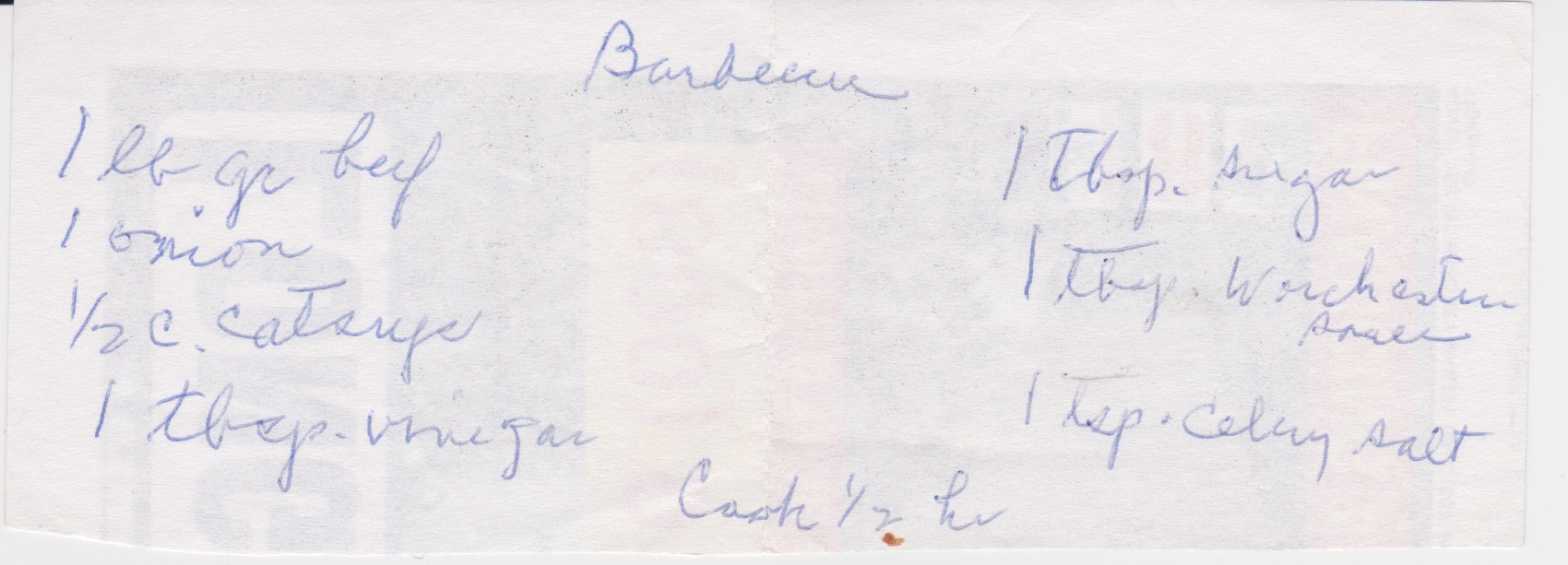
Barbecue
Instead, however, I'll focus on what the word means and how it's been used, both in general and in my life. The Oxford English Dictionary traces the word barbecue back to the Spanish barbacoa, which in turn came from the Haitian word barbacòa. All three terms—barbecue, barbacoa, barbacòa—originally referred, not to the food we today call barbecue, but rather to the cooking structure assembled for the purpose of barbecuing: a "framework of sticks set upon posts" above a fire ("Barbecue"). The first English usage in print seems to have happened around 1697. From there, the word evolved to refer to the social function that sprang up around cooking on a barbecue. George Washington talks about going to barbecues as early as 1769—he even mentions staying all night at one and even having his own. Some years later, Washington Irving called the barbecue "a kind of festivity or carouse much practised in Merryland"—plus ça change, Irving, plus ça change. Today, of course, the word mostly refers to the food cooked at or on a barbecue. This conflation doesn't seem to have occurred (convincingly, anyway) until the early 1800s when, serendipitously, a Philadelphia company makes reference to a "fine barbacue with spiced sauce" ("Barbecue").
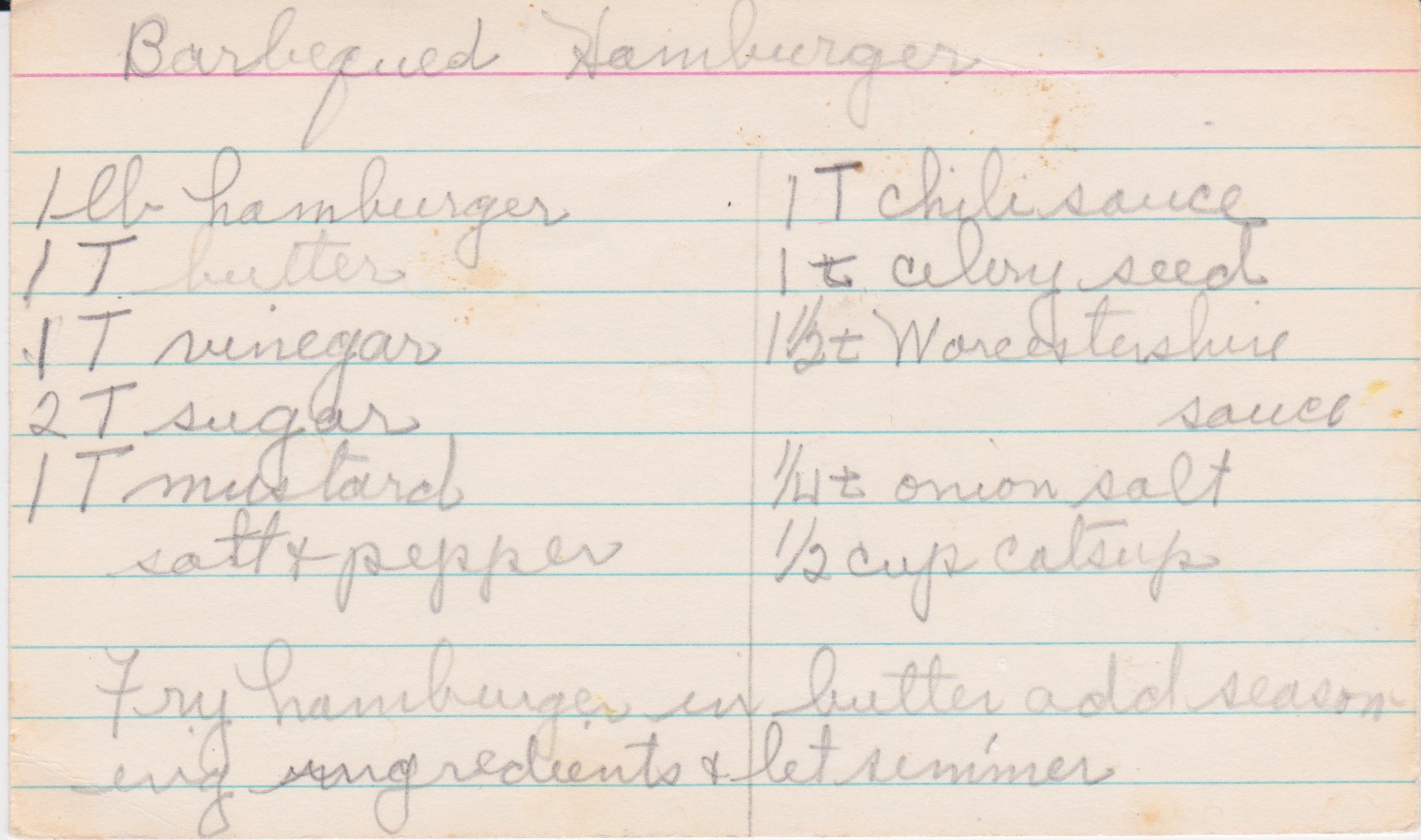
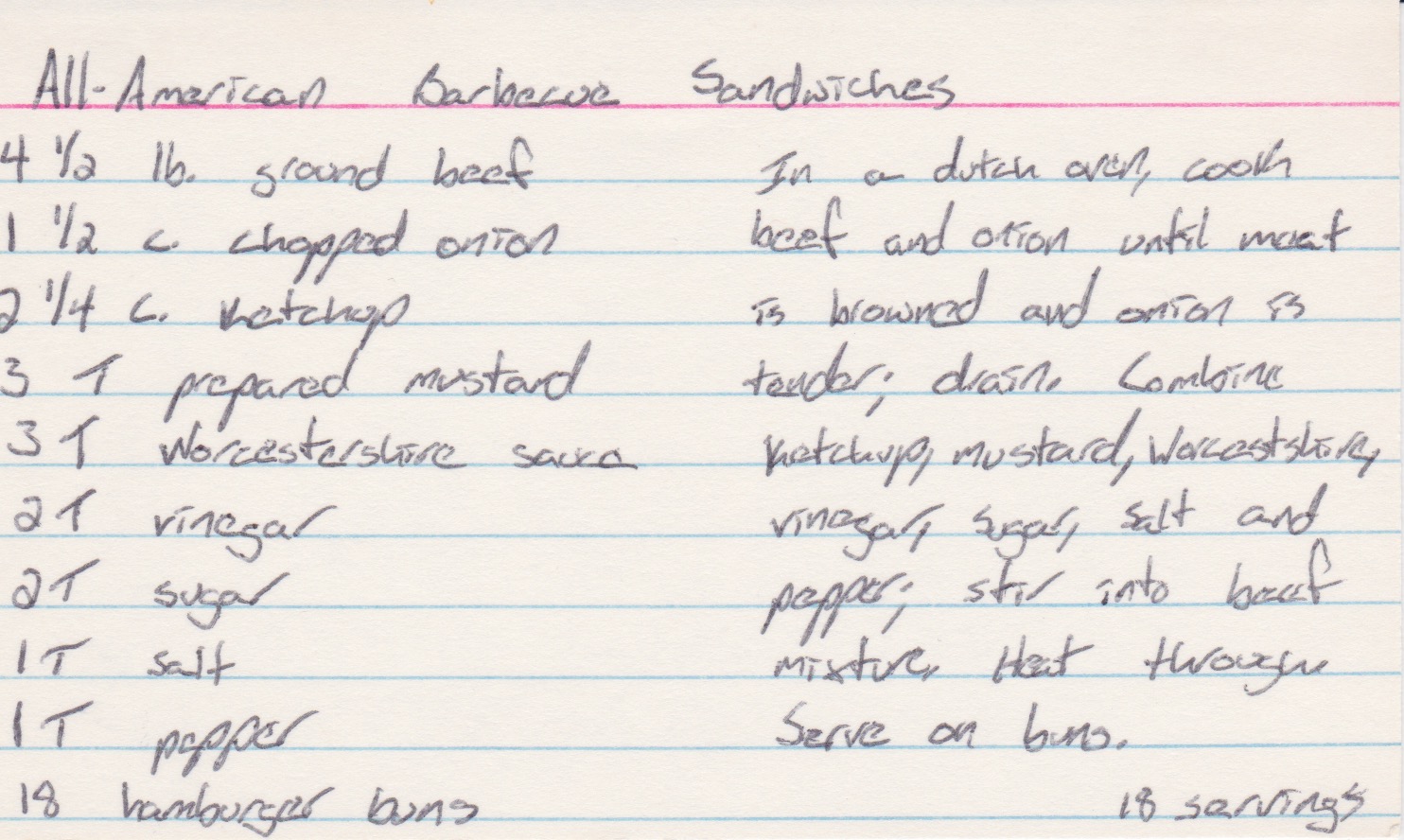
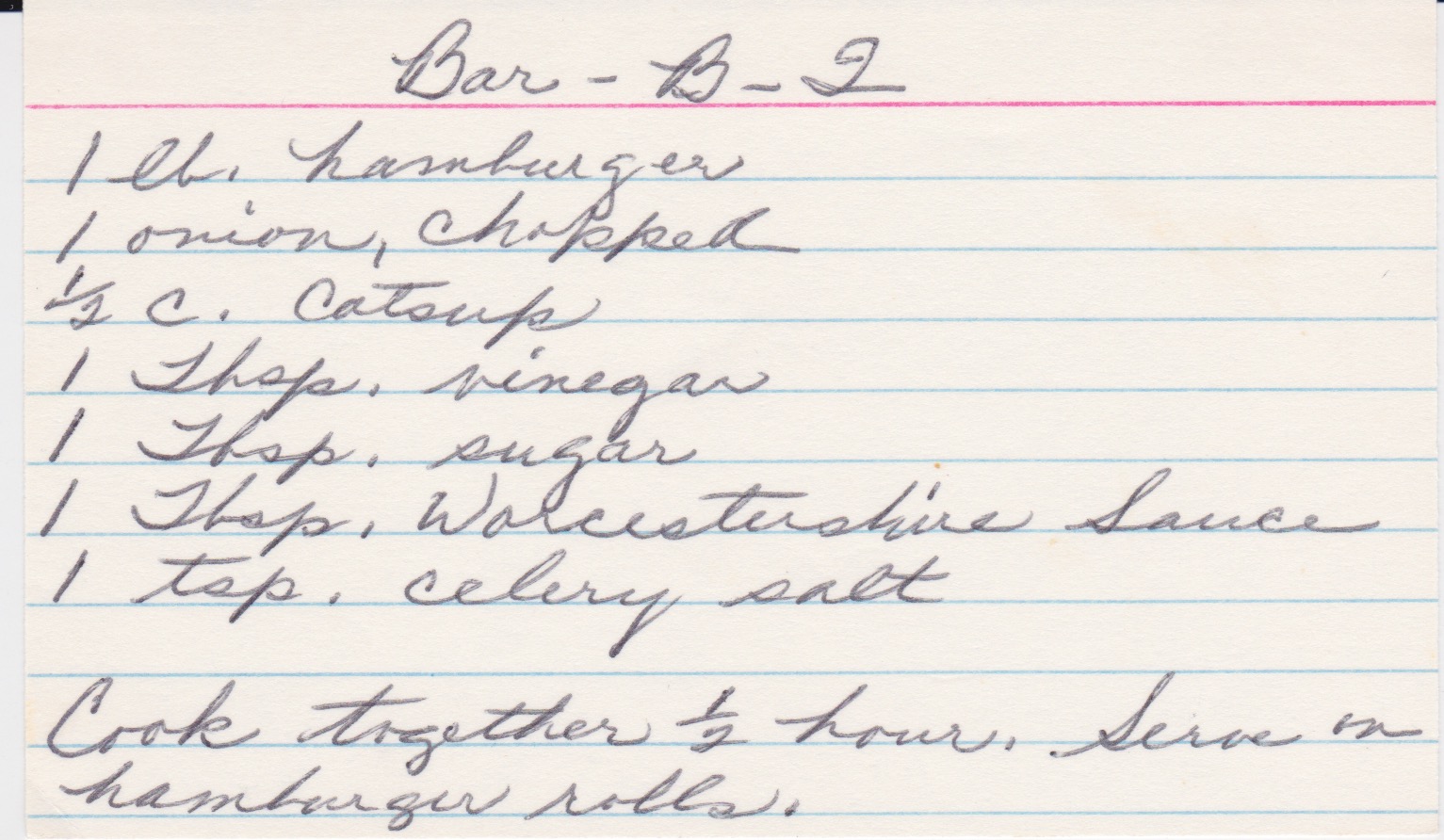
In the early-to-mid parts of the twentieth century, a further conflation occurred between that "spiced sauce" and both the food and its method, such that barbecue came to mean any meat slathered in a "barbecue sauce." Recipes for ground meat, enriched with a spiced tomato sauce and served on hamburger buns, began to crop up in popular cookbooks during the Depression, and thus the sloppy joe, the barbecue I grew up with, was born.
The recipe box offers four separate instances of barbecue, and I've added barbecue sauce as a fourth.
There are some similarities between the three.