Chain Hoist Selection for Industrial Applications
Abstract
This article provides a structured technical and procurement reference for engineering students, facilities managers, and industrial buyers evaluating a chain hoist for sale. It covers hoist classification by drive type and duty cycle, the key parameters that determine suitability for a given application, applicable international standards, and a cost-analysis framework for global sourcing decisions. The objective is to equip readers with the technical vocabulary and evaluative criteria necessary to make informed equipment selection decisions in academic, research, and industrial settings.
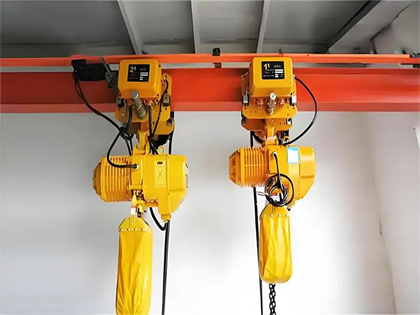
Chain hoists represent one of the most widely deployed classes of material handling equipment in industrial, construction, and research-facility environments. A chain hoist uses a mechanical or electromechanical drive system to raise and lower suspended loads via an interlinked load chain. Their operational simplicity, relatively low maintenance burden, and broad capacity range — typically spanning 0.5 metric tons to over 50 metric tons — have made them indispensable across sectors ranging from automotive manufacturing to academic workshop facilities.
Despite this ubiquity, engineering students and early-career procurement professionals frequently underestimate the specification complexity involved in selecting the appropriate unit. Mismatched duty cycles, inadequate headroom clearance, and incorrect power supply configuration are among the most cited causes of premature hoist failure and safety incidents in workplace investigations published by occupational health regulators in the EU, UK, and North America.
This guide draws on established international standards — including ISO 4301, EN 13157, FEM 9.511, and ASME B30.16 — to present a methodical framework for hoist evaluation. Readers seeking manufacturer-level specification comparisons and chain hoist price benchmarking from a factory-sourcing perspective may also consult the industrial buyer's guide published by Voitto Crane: Chain Hoist for Sale: The Industrial Buyer's Complete Guide.
2. Classification of Chain Hoists
The first step in any equipment selection process is establishing the correct product category. Chain hoists are classified primarily by their drive mechanism, with secondary classification by suspension type and load-chain configuration.
2.1 Manual Chain Hoists (Hand Chain Blocks)
Manual chain hoists — also referred to as hand chain blocks or lever hoists depending on the actuation method — employ a train of gears to amplify the force applied by the operator through a hand-pulled chain loop. The mechanical advantage provided allows a single operator to lift loads far in excess of their own physical capability, typically 0.5T to 20T across commercially available models.
Key advantages of manual units include complete power independence, compact transport weight (a 1T unit typically weighs 7–12 kg), and zero installation requirements. These properties make a manual hoist the default choice for maintenance operations, field construction, and any context where a portable chain hoist capability is prioritized over cycle speed.
From a thermodynamics perspective, the energy input to a manual hoist is directly proportional to the work done (W = F × d), with efficiency losses attributable to chain friction and gear-mesh losses. Modern units achieve mechanical efficiencies of 75–85%, compared to 55–70% for older cast-iron designs.
2.2 Electric Chain Hoists
Electric chain hoists substitute an electric motor and brake assembly for the manual drive mechanism. Load speeds are typically configurable — single-speed units offer one lift velocity (commonly 4–8 m/min at rated load), while dual-speed and variable-frequency-drive (VFD) variants allow precision positioning at reduced velocity.
The electric chain hoist is the most commonly specified unit in factory and logistics environments due to its high cycle rate capability and reduced operator fatigue. Capacity ranges extend from 0.5T units suitable for light workshop tasks to 50T+ systems used in heavy fabrication and port operations.
Control options include wired pendant controllers, infrared (IR) remote controls, and radio-frequency (RF) remotes. The latter eliminate trailing cable hazards in high-traffic environments and are increasingly specified in automotive and aerospace assembly facilities.
3. Duty Cycle Classification and Its Significance
Duty cycle is perhaps the most technically consequential specification that buyers fail to interrogate when evaluating a chain hoist for sale. A hoist's duty cycle rating determines how intensively the unit can operate over its design life before mechanical degradation accelerates beyond acceptable limits.
The internationally adopted classification system is defined under FEM 9.511 (Federation Européenne de la Manutention) and harmonized within ISO 4301-1. The system defines six mechanism groups (M1 through M8), each representing a combination of operating hours class and load spectrum class.
FEM/ISO Group | Typical Duty | Design Life (Hours) | Common Applications |
M3 | Light | 3,200 | Workshop maintenance, infrequent lifts |
M4 | Moderate | 6,300 | Small factory lines, storage facilities |
M5 | Medium Heavy | 12,500 | Fabrication plants, warehouses |
M6 | Heavy | 25,000 | Continuous production lines |
M7 | Very Heavy | 50,000 | Steel mills, automotive pressing |
M8 | Extra Heavy | 100,000+ | Port cranes, round-the-clock operations |
Table 1. FEM/ISO mechanism group classifications (Source: FEM 9.511; ISO 4301-1)
Engineering Note: A hoist installed at a duty cycle beyond its design rating will not fail immediately, but its load chain, brake friction material, and motor insulation will degrade at an accelerated rate. This creates a latent safety hazard that may not manifest until the unit is already mechanically compromised. Specifying at least one duty class above the anticipated operating profile is considered conservative engineering practice.
4. Key Specifications Reference
The following parameters must be fully defined before any procurement action is initiated. Incomplete specifications are the leading cause of incorrect unit delivery and costly returns in cross-border equipment transactions.
Parameter | Unit | Notes |
Rated Load Capacity | tonnes (t) | Apply ≥1.5× safety factor over maximum actual load per ISO 4301 |
Lift Height | metres (m) | Full hook travel from bottom to top limit; affects chain pocket drum size |
Duty Cycle (Mechanism Group) | M3–M8 | Derived from lifts/hour × hours/shift; see FEM 9.511 |
Lift Speed | m/min | Single, dual, or VFD; dual-speed adds ~15–25% to unit cost |
Power Supply | V / Hz / Phase | Confirm site voltage: 110V, 220V, 380V, 415V, 480V; 50 or 60 Hz |
Headroom (Min. Hook Distance) | mm | Critical in low-clearance facilities; refer to hoist dimension drawing |
Suspension Type | — | Plain hook, push-travel trolley, motor-driven trolley, lug mount |
Environmental Class | IP Rating / ATEX | IP54 minimum for dusty environments; ATEX required for explosive atmospheres |
Required Certification | — | CE (EU), ASME B30.16 (US), GS (Germany), CCC (China) |
Table 2. Specification parameters for chain hoist selection
5. Applicable Standards and Certification Requirements
Regulatory compliance is non-negotiable in industrial hoist procurement. The relevant standards framework depends on the deployment geography and the end-use industry.
5.1 European Union
All lifting equipment placed on the EU market must comply with the Machinery Directive 2006/42/EC, resulting in CE marking. For manually powered lifting equipment specifically, EN 13157 applies. Load chains must satisfy EN 818-7 dimensional and mechanical requirements. Hoists deployed in potentially explosive atmospheres require supplementary ATEX 2014/34/EU certification.
5.2 United States and Canada
In North American markets, ASME B30.16 (Overhead Hoists — Underhung) governs design, installation, inspection, and operation requirements for electric and manual overhead hoists. The standard requires rated capacity markings on every unit and stipulates pre-use inspection protocols for industrial environments.
5.3 International / Global Sourcing
For international procurement where goods must satisfy multiple market requirements, ISO 4301 and ISO 4308 provide the framework for classification and load application. GS certification (administered by TÜV and DEKRA in Germany) is increasingly treated as a quality proxy beyond CE for buyers in markets where GS-marked products carry reputational weight.
Academic Note: Certification labels on equipment should always be cross-referenced against issuing-body databases. Third-party verification services can confirm the authenticity of CE Declarations of Conformity and load test certificates provided by international suppliers. This is particularly relevant when sourcing chain hoists for sale through intermediaries rather than directly from manufacturers.
6. Chain Hoist Price Analysis: Understanding Cost Drivers
The chain hoist price for ostensibly similar products can vary by a factor of 5–10× across the market. Understanding the structural reasons for this variance is essential for procurement teams responsible for cost justification and budget planning.
6.1 Primary Cost Variables
Load capacity is the dominant price variable. The physical mass of structural components — including the hoist frame, hook assemblies, and load chain — scales non-linearly with rated capacity. A 10T electric hoist may cost 5–8 times the price of a comparable-quality 1T unit.
Drive type introduces a second major differential. Electric hoists require motor windings, brake assemblies, pendant wiring, and control enclosures that add manufacturing cost over a purely mechanical manual unit of equivalent capacity.
Certification and testing contributes a cost premium of approximately 10–25% over uncertified equivalents. This cost reflects factory testing infrastructure, documentation, third-party audit fees, and ongoing compliance management.
Country of manufacture and distribution model substantially affects landed cost. Factory-direct procurement from CE-certified manufacturers consistently delivers 20–40% cost reductions on equivalent-specification units compared to regional distributor pricing.
6.2 Indicative Market Price Ranges
Type | Capacity Range | Indicative Price (USD) | Notes |
Manual Chain Hoist | 0.5T – 3T | $30 – $180 | Basic / CE-compliant range |
Manual Chain Hoist | 5T – 20T | $150 – $600 | Heavy-duty / alloy chain |
Electric Chain Hoist | 0.5T – 3T | $150 – $700 | Standard duty M3–M5 |
Electric Chain Hoist | 5T – 10T | $500 – $2,000 | Heavy duty M5–M6; dual speed |
Table 3. Indicative price ranges (FOB factory, 2024–2025 market data). Prices are for reference only and vary with specification and order volume.
7. The Portable Chain Hoist in Multi-Site and Research Environments
Academic engineering departments, field research teams, and maintenance organizations across multiple sites share a common equipment constraint: the cost and logistical complexity of installing fixed lifting infrastructure at every location where a lift task may arise.
The portable chain hoist — specifically, a manual unit in the 0.5T to 3T range — addresses this constraint directly. Characteristics that define practical portability include unit weight below 15 kg for 1T–2T models, hook span compatibility with standard structural steel profiles (I-beams per EN 10034 or ASTM A6), and no dependency on electrical supply.
For university workshop facilities, a 1T manual hoist with a 3-meter lift height represents a cost-effective and OSHA-compatible solution for equipment repositioning, mold lifting, and prototype assembly tasks. The absence of installation requirements also eliminates the need for building consent or structural modification in most standard workshop configurations.
When evaluating whether a portable versus fixed installation solution is appropriate, the following decision criteria provide a practical starting framework:
- If lifts occur at more than two physically separate locations → evaluate portable
- If lift frequency exceeds 20 cycles per shift → evaluate fixed electric installation
- If the operating environment has no reliable power supply → portable manual only
- If load exceeds 5T → fixed installation almost always preferred for safety and ergonomics
- If equipment is shared between departments or teams → portable reduces procurement cost
8. Inspection, Maintenance, and Service Intervals
Engineering educators frequently note that the service requirements of lifting equipment receive insufficient attention in undergraduate mechanical engineering curricula. A well-specified hoist that is not maintained according to its manufacturer schedule and the relevant regulatory framework becomes a safety liability.
Under EN 818-6 (Chains — safety) and ASME B30.16, the following inspection regime is broadly recommended for industrial environments:
- Pre-use visual inspection before every operating shift — load chain condition, hook deformation, brake function, limit switch operation
- Periodic inspection every 6 months under standard operating conditions — includes functional brake test under rated load, chain elongation measurement (replace if elongation exceeds 5% of nominal per ISO 4347)
- Thorough examination annually or after any incident involving overloading, shock loading, or abnormal operation — conducted by a competent person with inspection records retained
- Load chain lubrication at manufacturer-specified intervals — typically every 50–100 operating hours for electric units in dusty environments
Inspection records form part of the equipment's compliance documentation and may be required by insurers or regulatory bodies following a workplace incident. Engineering facilities managers should establish a documented inspection schedule as part of their ISO 45001 occupational health and safety management system, where applicable.
9. Global Sourcing Considerations for Institutional Buyers
Universities, research institutes, and large industrial operators increasingly evaluate direct international sourcing for capital equipment categories — including lifting equipment — as part of cost reduction programs. The economics are generally favorable for orders of five units or more, where freight cost as a percentage of unit value declines sufficiently to make factory-direct pricing compelling.
Institutional procurement teams evaluating chain hoists for sale from international suppliers should establish minimum due diligence requirements as a sourcing policy:
- Valid CE Declaration of Conformity or equivalent for the target market, issued within the past 36 months
- ISO 9001 quality management system certification current and verifiable via the issuing body's database
- Minimum 5 years of documented manufacturing history in the hoist product category
- Load test reports with unit serial numbers (not generic factory certificates)
- Warranty terms in writing: minimum 12 months on mechanical components
- Confirmed MOQ flexibility: the ability to purchase sample units prior to bulk commitment
- Pre-shipment inspection option available via third-party inspection agency (SGS, Bureau Veritas, Intertek)
10. Conclusion
The selection of an appropriate chain hoist for a given application is not a trivial task, despite the apparent simplicity of the product category. Errors in duty cycle specification, power supply matching, or certification compliance carry consequences ranging from premature equipment failure to regulatory non-conformance and, in worst-case scenarios, serious workplace incidents.
This article has presented the core technical framework — hoist classification, FEM/ISO duty cycle taxonomy, specification parameters, applicable standards, and maintenance requirements — that should underpin any structured evaluation process. The price analysis section has highlighted the structural factors driving cost variance in the market, with particular attention to the economics of factory-direct global sourcing for institutional buyers.
Engineering students approaching this topic for the first time should treat hoist selection as a holistic systems engineering problem: the hoist is one component in a lifting system that includes structural supports, rigging, operator training, and a documented inspection program. Excellence in equipment specification, divorced from these contextual factors, is insufficient to ensure safe and reliable operation.
References & Standards
- ISO 4301-1:2011. Cranes — Classification — Part 1: General. International Organization for Standardization.
- FEM 9.511. Rules for the Design of Serial Lifting Equipment. Federation Européenne de la Manutention.
- EN 13157:2004+A1:2009. Cranes — Safety — Hand-powered lifting equipment. European Committee for Standardization (CEN).
- ASME B30.16-2017. Overhead Hoists (Underhung). American Society of Mechanical Engineers.
- EN 818-6:2000. Short link chain for lifting purposes — Safety — Part 6: Chain slings. CEN.
- ISO 4347:2015. Leaf chains, clevises and sheaves — chain elongation reference. ISO.
- European Commission. (2006). Machinery Directive 2006/42/EC. Official Journal of the European Union.
- European Commission. (2014). ATEX Directive 2014/34/EU. Official Journal of the European Union.