This page was created by Qisen Song.
Reinterpreting Traditions : Background
Although connecting with the context of a skyscraper becomes a very difficult problem for most architects, Jin Mao Tower (Smith, 1998), the tallest skyscraper in China at the time of its completion and the pioneering building of worldly famous Lujiazui Financial District in Shanghai, addresses locality and uniqueness of Chinese culture elegantly in response to globalization in China. Recalling historical pagoda form which is the unique Chinese architectural form that emphasizes on verticality and connects with skyscrapers, with setbacks that create a rhythmic pattern, the 88-story tower has become a model for skyscraper design throughout the country. On the other hand, Woolworth Building (Gilbert, 1913), the gothic skyscraper in New York which opened in 1913, a time much earlier than the opening of Jin Mao Tower, would serve as a comparison with Jin Mao Tower. Cass Gilbert (1859-1934) also ambitiously integrated gothic architectural elements and style into the tallest building in the world back then, which were quite familiar for the residents in New York City with long time traditions of gothic architecture. This research will address the most critical questions of how Jin Mao Tower transformed traditional Chinese characteristics into modern design, how it connects with the local culture, aesthetic traditions, and religious context of Shanghai, China, and what peer architects can learn from this building that would make the future of Chinese skyscrapers more connected with China and its people.
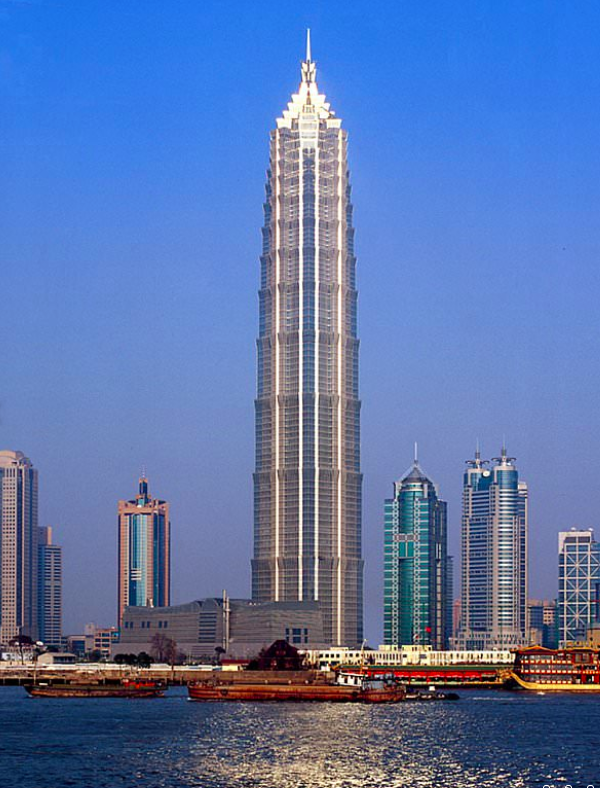
Jin Mao Tower, translated as “Golden Prosperity Building” is commissioned by China Shanghai Foreign Trade Company, an international trading corporation that was controlled by the Chinese government. Approved in 1992, the project of Jin Mao Tower, in its essence, is a plan that has been significantly influenced by the government and therefore conveyed the message for the Chinese government. According to its architect Adrian Smith (1944- ), the building was decided to host eighty-eight floors even before the beginning of its commission, because Deng Xiaoping was 88 years old when he when he stood on the site of Pudong area and declared that it would be the new financial center of China and that “to be rich was glorious.” All of these events also took place in August 1988, so the number 8 became very important as well as a symbol of good luck and prosperity.[1] The significant influences of political symbolism and personality cult are proven to be true even before the project started.
-
-
[1] Adrian D. Smith, The Architecture of Adrian Smith : the SOM years, 1980-2006 : Toward a Sustainable Future (Mulgrave, Victoria: Images Publishing Group Pty Ltd, 2015), 86