Premodern Korea in the Emergent World
IntroductionKangnido
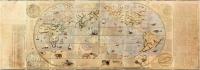
Map of integrated lands and regions of historical countries and capitals (Chosŏn, 1470 [1402])
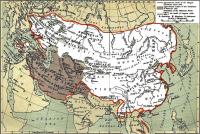
Ref. Pax Mongolica
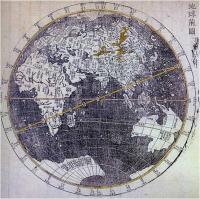
World Map by Matteo Ricci
Matteo Ricci, a Jesuit priest, made the map for his Chinese imperial host in 1602 (introduced to Korea in 1603).
Konyŏ man'guk chŏndo (map of ten thousand countries)
A 1708 Korean copy of the world map by Matteo Ricci. The Chinese original is the oldest surviving Western map in East Asia.
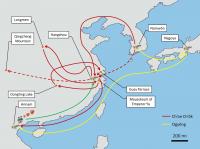
Ref. Choe Chok's travel routes
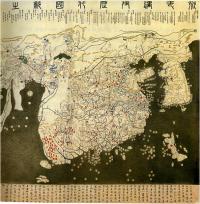
Chonha do
Wŏnhyŏng Chŏnhaso, 17th century (Kyujanggak)
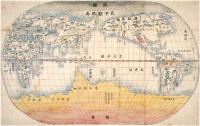
1834 world map by Ch'oe Han'gi and Kim Chŏngho
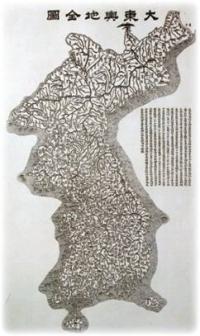
1861 map of Korea by Kim Chŏngho
Author Biography
Sookja Cho is an assistant professor of Korean at Arizona State University. Cho’s research fields include Pre-modern Korean and Chinese literature and culture, Sino-Korean exchange and East Asian comparative literature, performance literature, and oral storytelling and folk literature. She is the author of two books, Transforming Gender and Emotion: The Butterfly Lovers Story in China and Korea (University of Michigan Press, 2018) and The Tale of Cho Ung: A Classic of Vengeance, Loyalty and Romance (Columbia University Press, 2018). She is currently working on projects on Sino-Korean literature and cultural exchange.______________________
For more modules, please see the Asia Mediated Table of Contents.
To review this module, click the button below or navigate it's contents using the drop down menu found on the top left-hand corner of the screen.