Dale Davis Interview at Occidental College
This page has annotations:
- Dale introduces himself Thomas Carroll
- You do what you have do. Thomas Carroll
- Dale was also an artist, would make art after he got home from his second job. Thomas Carroll
- "Did you have any input in any of the art selected for Oxy?" Thomas Carroll
- He had not seen the press release for the show until a few months ago when Professor Lyford sent him the release. Thomas Carroll
- Davis laughs at how formal they dressed in the beginning but they knew that this was a serious task to take on. Thomas Carroll
- The artist on this card and these are some the most important artists in America, these are just your regular people who happen to be exceedingly talented. The only name left of this card is Betty Saar. Thomas Carroll
- They weren’t shy to other more militant groups, but they did it the way they wanted to. Thomas Carroll
- "Can you recall a moving response you’ve had to someone’s work and vice versa?" Thomas Carroll
- There are people that wanted the gallery only for African Americans only Thomas Carroll
- Dale gets married while doing these three other things. Thomas Carroll
- However their community has tried to box them in, it’s a much bigger picture. Thomas Carroll
- “You have to be motivated. The rewards come, you just can’t always count on it.” Thomas Carroll
- David Bradford was a friend of the Davis brothers and he told the Davis brothers that there was a place for rent and they should rent it as a gallery. Thomas Carroll
- Leimert Park was part of a community that was… Minorities were not allowed to buy… Restricted covenant based community, two years after the covenants were removed. White flight had taken its roots. Thomas Carroll
- Davis went to LACC after high school, where he spent two years. Thomas Carroll
- If you don’t clear up what is not right, it’s going to south. It was a reminder of what is not known. Thomas Carroll
- They had to hone their skills to act confidently around people with money. Thomas Carroll
- He had to do something to make his artwork stand out. Thomas Carroll
- Davis had to go back into his archives and remind himself, he doesn’t remember it. He didn’t attend. Thomas Carroll
- Davis loved taking work out of their gallery and putting it in “the real world” you have an audience that is different and literate. Credit goes to all places at all times. He was a teacher so he had an affinity for educational environments. He’ll talk to Thomas Carroll
- They listened to wiser people. Thomas Carroll
- People thought Davis was a clerk of the gallery. Thomas Carroll
- They were criticized for showing abstract work, they were accused of selling out “the cause.” Thomas Carroll
- Davis attends Dorsey High School Thomas Carroll
- Professor Lyford opens it up for questions. Thomas Carroll
- Last but not least, Noah Purifoy. Thomas Carroll
- The landlord found them interesting and was fair to them. He would come to an occasional show. He was an odd guy. He kept their rent affordable for years. He did not try and gentrify on their backs. Bottom line, he was very good to us. Thomas Carroll
- Transferred from LACC to USC, where he felt like he was back in Alabama. Felt unwelcome and out of place. Thomas Carroll
- He has the archive, because of Mark Bradford, another Genius grant winner. A second awardee, from the same block. Thomas Carroll
- Mentors asked them what their long term goals were. What were their business plans? Thomas Carroll
- All exhibits and artists were picked through dialogues. Thomas Carroll
- They learned to take a stand and roll with it. Thomas Carroll
- “What was the greatest challenge?” Thomas Carroll
- They wanted to quit a lot of the time. Davis and his brother made an agreement that they would only close the gallery if they both voted no. Thomas Carroll
- Davis talks about seeing his first “white only” drinking fountain in Montgomery, Alabama. Thomas Carroll
- David Bradford was the only African American artist in Berkeley art department for a long time. Thomas Carroll
- "Could you talk more about the conversations you had with your community?" Thomas Carroll
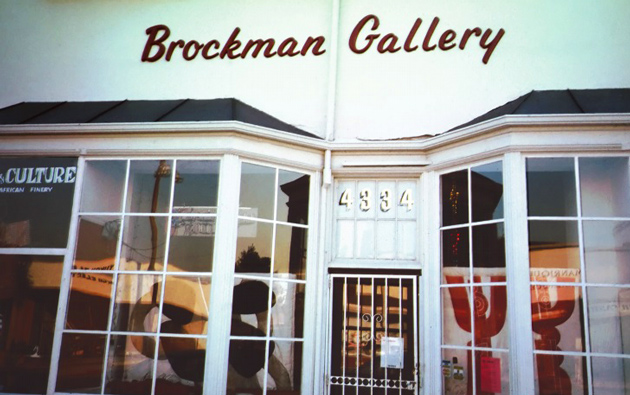
- Brockman Gallery opens in 1967 while still teaching full time. Thomas Carroll
- Davis became Mark Bradford’s first artist in residence. Then Bradford bought the nine store fronts. Thomas Carroll
- Marie Johnson, at the time, she was an older African American woman, assemblage artist, did things similar to Purifoy. Thomas Carroll
- The art came after all this other things. Thomas Carroll
- Davis says the greatest challenge was making the gallery profitable. Thomas Carroll
- They opened up space for writers, photographers, classes for children, drum workshops, African American based movie productions. It was gift. Thomas Carroll
- Could you describe the art landscape of LA in 60’s and 70’s? Thomas Carroll
- If you had to mount the show at Oxy today, how would it be different? Thomas Carroll
- So many things are temporal. Davis has 95% of everything that they’ve ever printed. Thomas Carroll
- They had Korean artists prior to the influx of Korean people to Los Angeles. Thomas Carroll
- Over time, all the businesses left, this was during the time Brockman was open. They were the first African American business there. His brother lived in the space for many years. Thomas Carroll
- Alonzo (his brother) would open the gallery around noon and Dale would come after teaching. Thomas Carroll
- Be committed, be strong, have fun, do the work, party later. Thomas Carroll
- Davis was mentored by a lot of people and reached out to other mentors. Thomas Carroll
- They started buying the work and creating the Brockman Gallery Collection and then you’re down in your own wallet. This makes you a stronger gallerist. Thomas Carroll
- Davis used his ceramics to augment the profitability gap. The life of the gallery was built on cards, prints, jewelry and ceramics. Thomas Carroll
- They did murals, Brockman Gallery Productions. Was it an all African American based production? No. Thomas Carroll
- African American artists had no gallery opportunities. They would show in someone’s home or a church basement. Thomas Carroll
- Based of the critics and the students… Thomas Carroll
- He thought they had everything. Thomas Carroll
- Dale Davis discusses his life before Brockman Gallery, what it was like growing up in Alabama. Thomas Carroll
- David Hammons was the first person Davis knew to win the MacArthur “Genius” Grant. Davis though, “David?!” Thomas Carroll
- He’s taken this on as his life project to make sure the names are correct Thomas Carroll
- They were open for 20 years. Thomas Carroll
- John Otterbridge, one of the most outstanding artists still out there. Thomas Carroll
- You can’t take anything for granted. Davis went to UCLA for grad school but couldn’t take it. Thomas Carroll
- They opened the door very wide in opening the gallery. Thomas Carroll
- Davis recently saw an article recently that wondered if David Hammons was the best artist period. The man is formidable character. To know in Davis’s lifetime, that his peers are in this kind of ranking, it’s big. It’s an incredible thing. Thomas Carroll
- Because he was the child of librarian, he knew the importance of history and preserving artifacts. Thomas Carroll
- They were almost left out of mural in Leimert Park that documented the legacy that Brockman started. He wasn’t sure what to think about the muralist who was a younger peer. Thomas Carroll
- Hammons remains a down to earth kind of guy Thomas Carroll
- Davis and his brother drove a VW Bug across the south to the March on Jackson, to confront the racist police and the KKK. Thomas Carroll
- They created a non-profit. They had their gifts, but they listened. Thomas Carroll
- Davis started teaching at Dorsey High School where he worked for 35 years. Thomas Carroll
- Leimert Park was newly open to African Americans in the 60’s. They got flack from the community for opening up the gallery to people other than African Americans. Thomas Carroll
- Romare Bearden. Elizabeth Catlett Mora. She was married to Charles White. In Mexico, her work is part of national monuments. Mexico had to approve the loan of her work. Thomas Carroll
- He wanted to use the talents he had in his community, not elsewhere in the city. Thomas Carroll
- This is a hot ticket, bulk mailer on the back, with an archival material number on it. Thomas Carroll
- Good thing he couldn’t see into the future, to fully understand how much work it would take. They took it one year at a time. The best cycle was the Fall, people had more money to spend on art. Thomas Carroll
- Noah Purifoy was Davis’ mentor. Early on, Davis knew the level of quality that Davis would have to show along side these other artists. Thomas Carroll
- "What was Oxy’s response to the Black Arts Show?" Thomas Carroll
- Davis’s parents thought he was going to be a doctor. Davis’s brother was chosen as the mouthpiece of the gallery. Thomas Carroll
- "How was having the show in academic space rather a gallery space different?" Thomas Carroll
- They had a rule that you couldn’t switch drivers until you ran out of tank of gas. Thomas Carroll
- Davis moves to Los Angeles as a 10 year old. Thomas Carroll