Structural Engineering
The fact that Wright required an engineer to calculate many of the values and properties that would make his structures possible brings up one of the discrepancies between architects and structural engineers. Architects typically design buildings with the idea of 'function follows form', meaning that the visual appeal and aesthetics of a building are thought of first, while the actuality of the design is cast off to the side to be thought about later. When later finally comes, the structural engineers step in and find ways for the idea to become reality. In other words, architects typically design a building with the image in mind, while structural engineers typically take the design and discover how to translate the image off of the paper and into real life.
Sometimes the conflict the aforementioned difference in visualization of a building causes problems, as is evident from Wright's Fallingwater. Wright visualized a house serenely placed over a waterfall with daring yet elegant balconies overhanging the building's base. Though Wright originally designed four bolsters to support the structure, his final product only had three of the foundation bases. With on less bolster and cracking cantilevers, Kaufmann, Fallingwater's commissioner, contacted an outside engineering firm which highly suggested placing in an increased amount of steel rods.
The added steel rods, in some perspectives, may have saved Fallingwater and kept it from falling into the stream below until the restoration of 2001 to 2002, though others argue that the extra metal rods just added extra, unaccounted for weight, which is why the structure was failing in the first place. This argument brings about another discrepancy between the two occupations. In order to create architectural feats, architects and engineers must work together. However, when there's miscommunication or discourse between the two, the building typically has flaws that create problems later on.
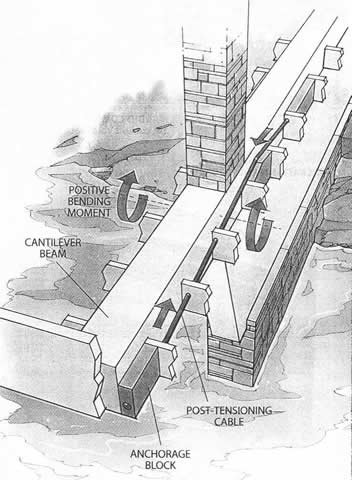
Moreover, when architects and engineers work with one another to solve a problem, they come up with really great solutions. For example, when Fallingwater was literally falling, instead of taking away from the architectural integrity of the building architects and engineers worked with one another and came up with post-tensioning, which is structurally sound but not visible, allowing the balconies to keep their daring architectural standing.
Potential additions to page:
- techniques used in engineering and architecture (ie cantilever, reinforced concrete) and durability over time
- masonry construction, and other traditional forms of construction
- suspension, details in Wright's work, steps under fallingwater
- supporting walls vs. steal framework
- preferences about points such as materials