Thanks for your patience during our recent outage at scalar.usc.edu. While Scalar content is loading normally now, saving is still slow, and Scalar's 'additional metadata' features have been disabled, which may interfere with features like timelines and maps that depend on metadata. This also means that saving a page or media item will remove its additional metadata. If this occurs, you can use the 'All versions' link at the bottom of the page to restore the earlier version. We are continuing to troubleshoot, and will provide further updates as needed. Note that this only affects Scalar projects at scalar.usc.edu, and not those hosted elsewhere.
Digital Exhibits: Ancient Art 203Main MenuAncient ArtTable of ContentsSample Exhibit - Herakles in Greek ArtDepictions of Herakles in Greek ArtAngyal- The Culture of Pre-Columbian TimesThis exhibit displays the important symbols culture during ancient Pre-Columbia.Aversa- Ancient FacesThe collection includes portraits of many Ancient faces made of marble, limestone, bronze and black basalt.Brookes - Sculptures Of The GodsA look at Sculptures of Gods during the classical and hellenistic period of Greek history. This will tell you the stories of the Gods being shown and the growth of realism during this period.CERMINARA-Ancient Greek FigurinesExploration of different Terracotta figurines from ancient GreeceCooke -- Black Figure Art from Ancient GreeceThis page will highlight some works that were made using black figure, which is named for the color of the figures depicted in the art.Costa- Death and AfterlifeFoley - Statues and figures of Greek MythologyMy theme is Greek Mythology in the forms of statues and figuresFowlerHow the human body is depicted through Ancient ArtHarris - Greek AthletesThe Olympian games began in Greek times. These pieces will depict Greek Athletes doing the gamesJoseph - Hellenistic ArtThe Hellanistic art style focuses on realistic, natural human forms. Straying away from the rigid unnatural forms of ancient sculpture styles before it.Lamon- Mythical Creatures in Greek and Cycladic ArtThis exhibit will take a look at how Mediterranean civilizations depicted a few mythical beasts throughout different periods.Leszczynski - Late Minoan, Creature, Covered, GemsA collection of Lentoid gems engraved by Minoan craftsman. Some served a useful purpose as seals. This collection spans the Late Minoan I-II period to the Late Minoan II-IIIA period.McDonough - Medusa in Ancient Greek ArtA look at one of Greek mythology's most feared creaturesMeehan - Ancient Spartan ArtPopular Art and Customs of Sparta and LaconiaNelson - Ancient Egyptian StatuesThis digital exhibit displays a collection of statues from Ancient EgyptRamos- Marble FigurinesFemales figurines are an important part of ancient Greeks art history .Raquet- The Acropolis ReunitedPutting the Parthenon back togetherSHORT - Representations of the Minotaur and His StorySmithKali - Depictions of the Human BodyStarrs--Art of the Trojan WarA sampling of pottery inspired by the mythical Trojan War.Wible - AphroditeMy theme is the representation of Aphrodite through different types of art.Danielle Bennett672675c081461104799d4151a54a1faf0c800419
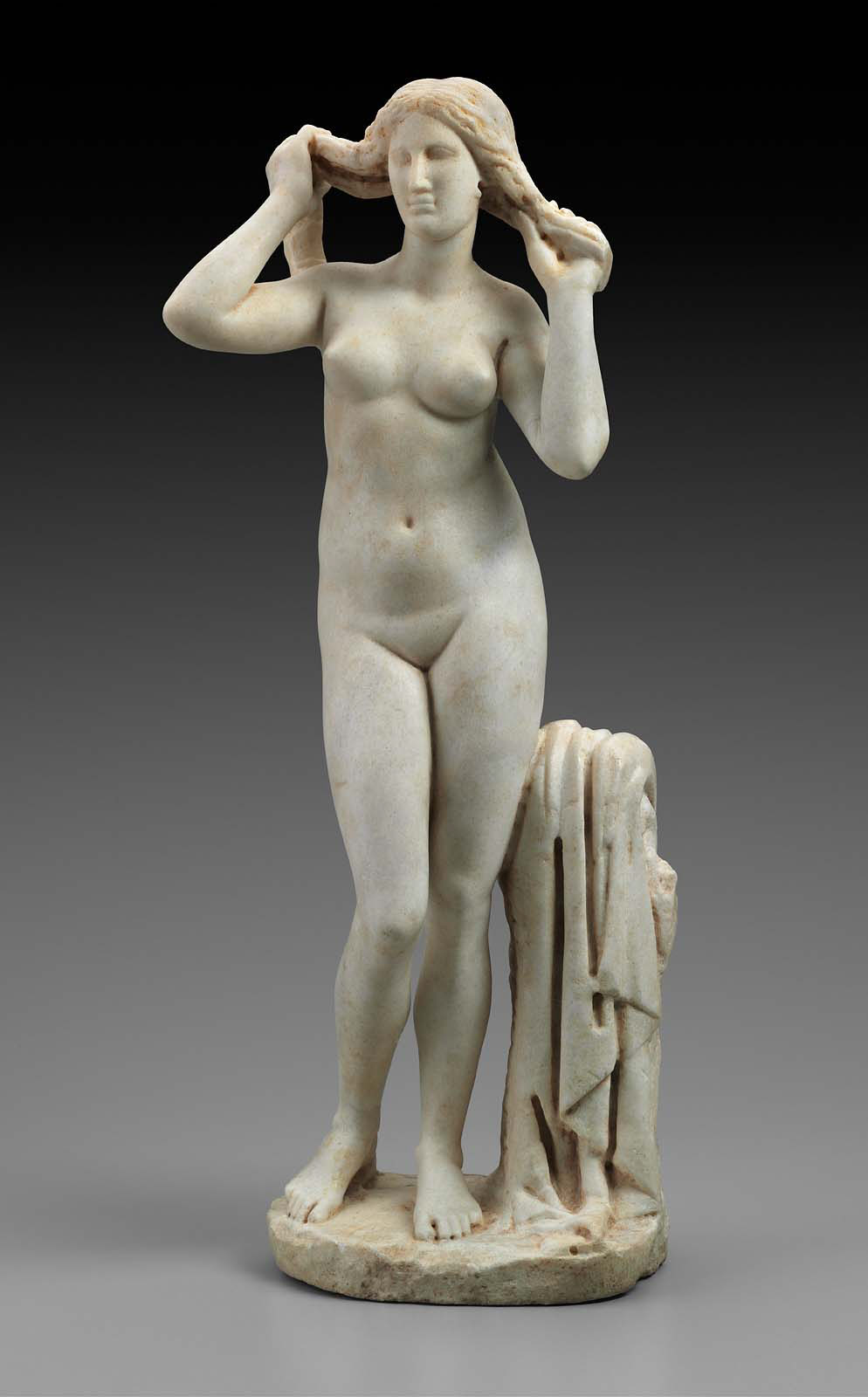
Statuette of Aphrodite rising from the sea (Anadyomene)
Ancient Greece and Greek life was steeped in mythology, stories of gods, goddesses, and super-humans. These stories and myths were often brought to life in art form, ranging from paintings to statues. In this exhibit we will look at how the Ancient Greeks immortalized those they worshiped and glorified in various mediums, from stone, marble, to bronze. This exhibit covers from the Early Hellenistic Period to the Imperial Period.
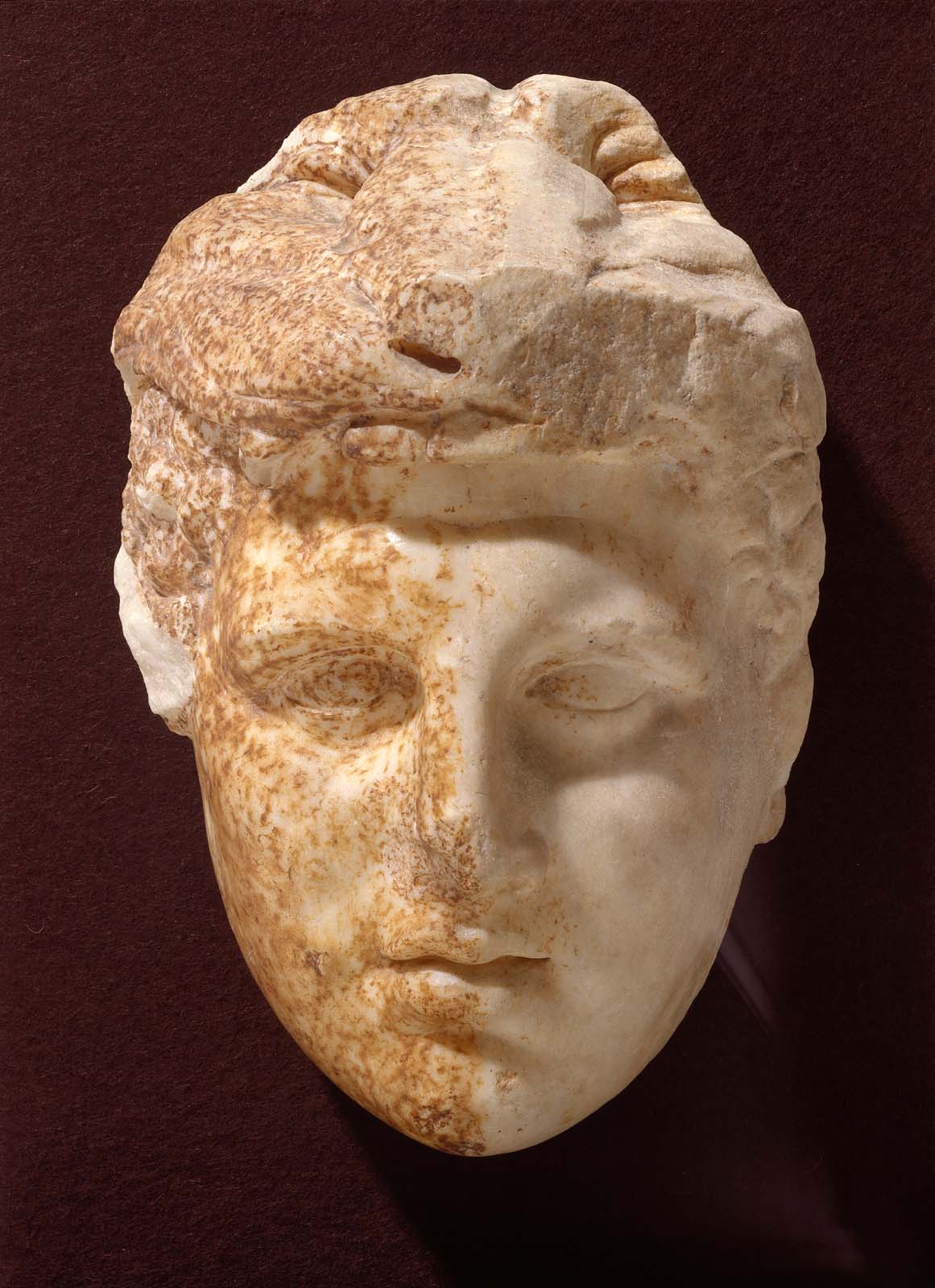
This Head of Heraklesis a head which has been broken off of a statue or figure. This head is believed to belong to Herakles/Alexander the Great, which is noted by the Neamen Lions Head he is wearing as part of the Lions skin. The Neamen lions head originates from the Labors, which were tasks set upon Herakles to accomplish. One of the very first Labors included killing a lion, which he did. Afterwhich, he wore the skin of the lion to show what he had done and pronounce his warrior side. Alexander the Great is mentioned as he often used the face of Herakles on coins, to the point that Herakles became the face of Alexander.
This Helmeted Head of the god Mars is most likely from a copy of the Colossale Cult Image, found at the temple of Ares at Halicarnassus, on the acropolis. There is some dispute about the sculptor, with Leochares being most widely accepted, but with Timotheos often being thrown into the mix. This head is identified as the god Mars by the helmet he is wearing, which is plummed, and his near perfect facial features. Notably, the hair protruding from his helmet on his forehead displays a Trajanic or Hadrianic fashion, which leads some to believe this was a new type of interpretation of the god. Source: http://www.mfa.org/node/9416
Another well known and much revered god in ancient Greece is Jupiter(Zeus). This particular statue is missing two important aspects. His left hand would have held a scepter-staff, which was a symbol of royalty, and his lowered right hand would have been supported by a thunderbolt. This thunderbolt was significant due to the fact that he was seen as the god of the sky and the thunder which comes from it. His eyes still have remnants of silver inlay, and his left foot is missing. Another notable feature is the way this bronze statue is flowing slightly from the head to the feet, in a leaning stance. Source: http://www.mfa.org/node/9416
Aphrodite is the goddess of love, beauty, pleasure, and procreation. In this particular piece, the goddess is nude and seen adjusting or playing with her hair as she emerges from the sea, which is where she is believed to have been born fully grown. This statuette is leaning slightly against a stump with a cloth or article of clothing on it. In ancient times Aphrodite was heavily associated with water, thus statuettes and figures of Aphrodite would often be placed in water fountains or water basins and the like. The style shown here would have been based off of a Hellenistic form. Source: http://www.mfa.org/node/9416
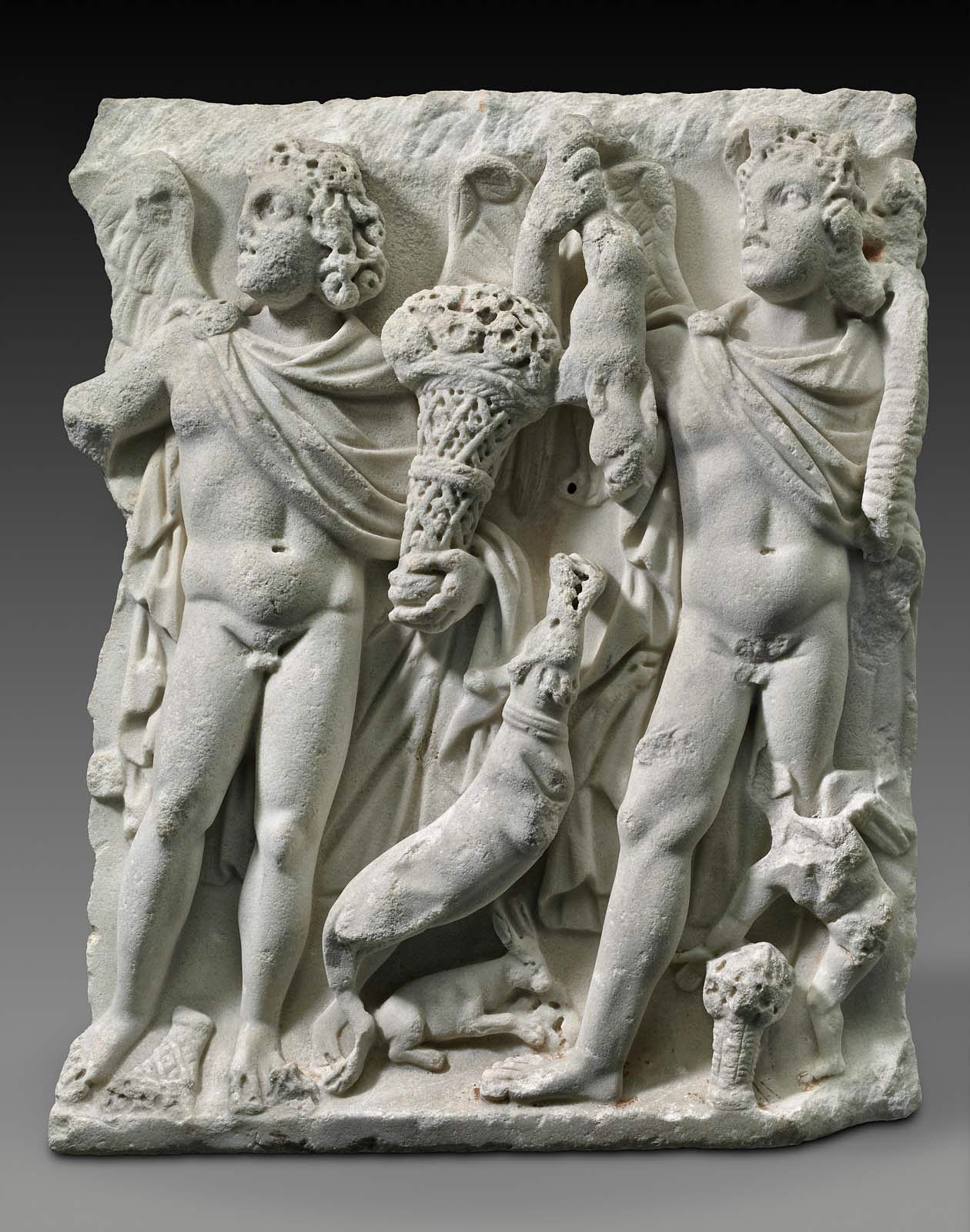
In this relief two winged youth, often called genii, represent the seasons of Summer and Autumn. You can tell them apart as summer is holding a basket of fruits and flowers, as a second basket is lying at his feet. Autumn, on the other hand has returned triumphant from his hunt, presenting a hare and cornucopia, all the while his hound is excited at his feet. This relief was meant to showcase each season and its cycle in life, which was a common theme in Greek art. However, the winter and spring figures have been since lost. This piece is believed to have originally belonged on a sarcophagus. Source: http://www.mfa.org/node/9416

.jpg)
%20statue.jpg)