Scalar's 'additional metadata' features have been disabled on this install. Learn more.
Intangible Cultural Heritage: Urgent Safeguarding Intangible Cultural Heritages
Main Menu
Mustafa Kandil
9044c0ef374078425a0d3c2b412f02198dd6464c
Mustafa Kandil | PhD Student | Information Culture and Cultural Stewardship | University of Pittsburgh
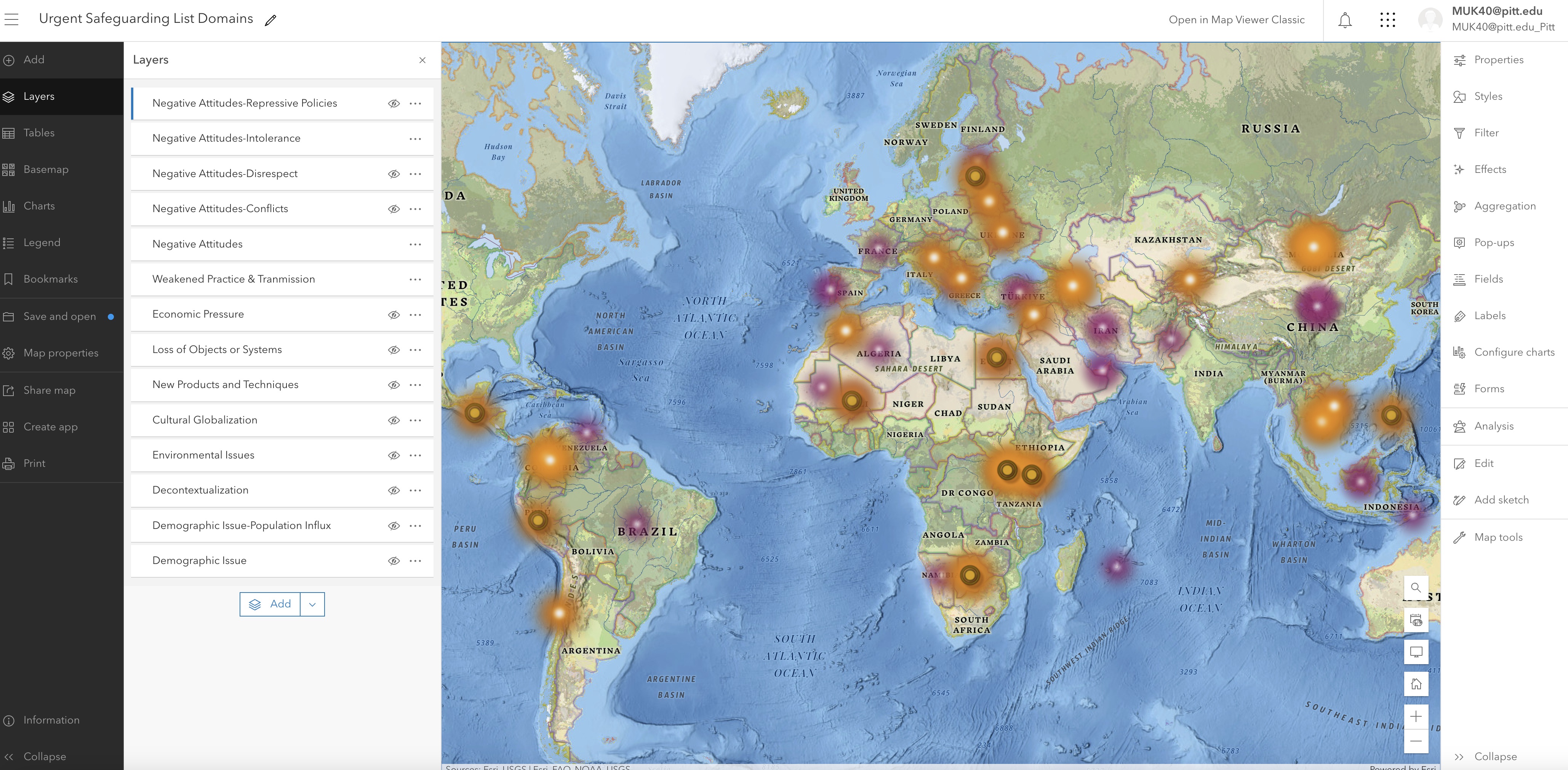
ArcGIS - Layers
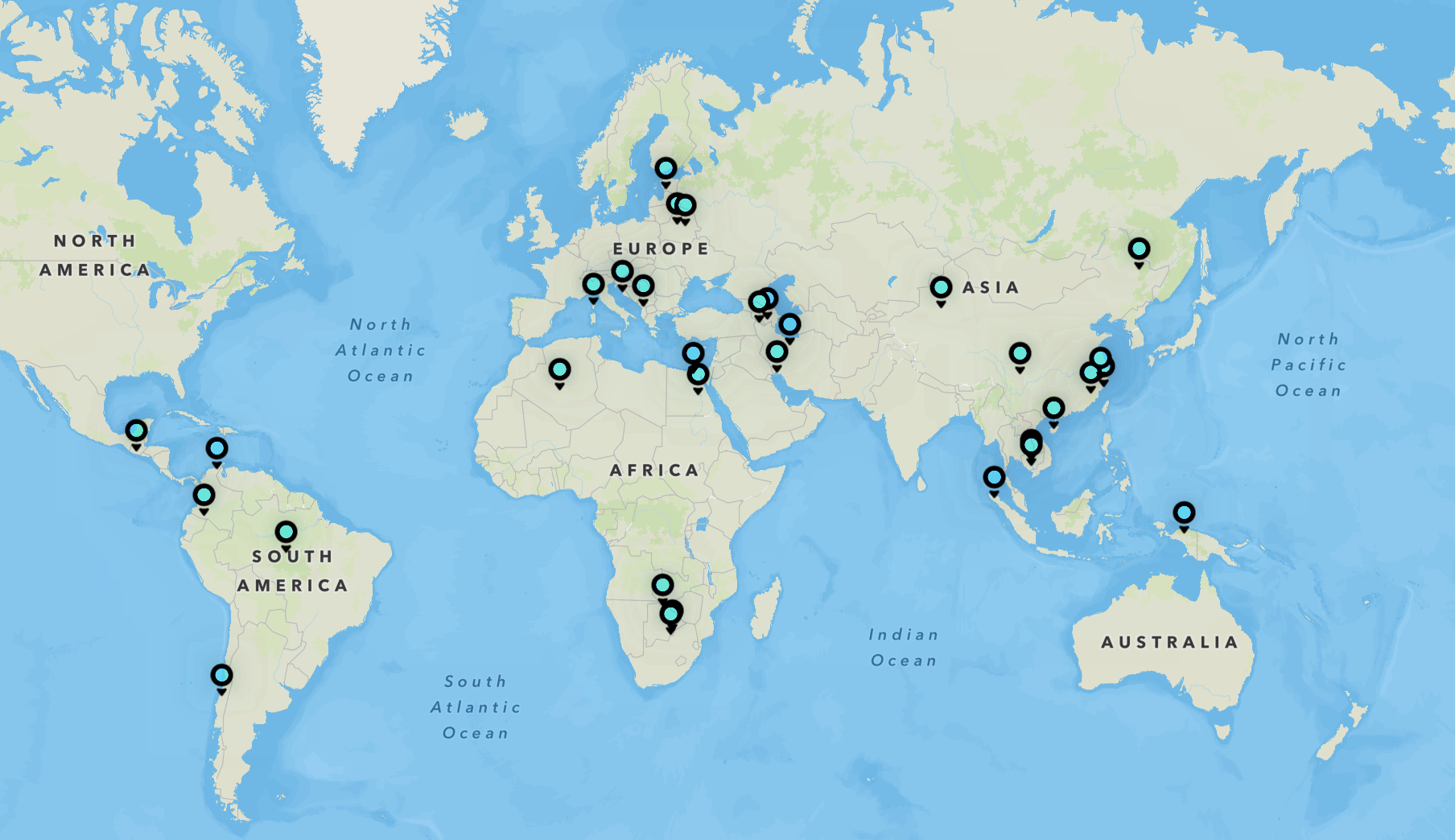
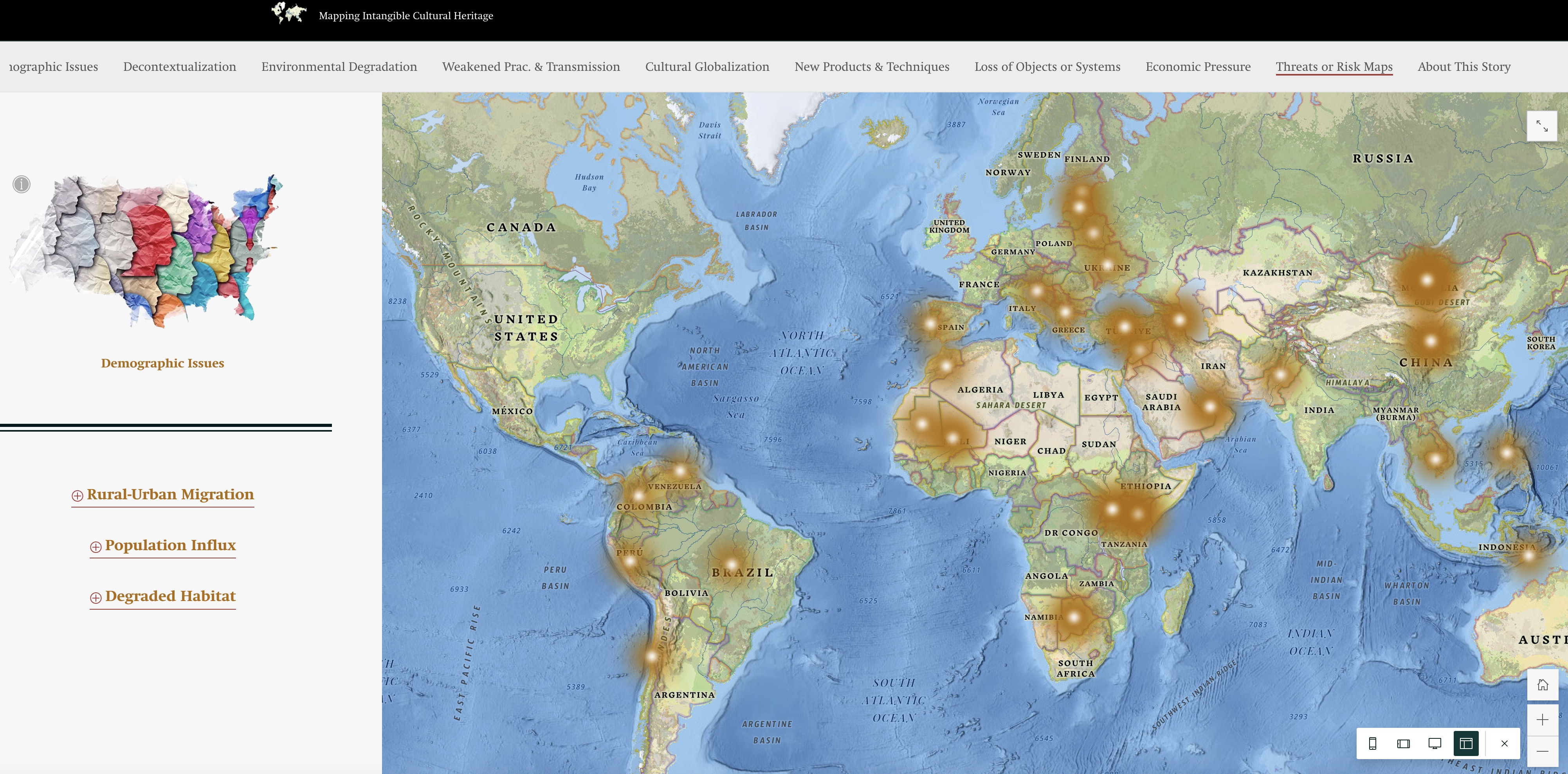
1 media/Screenshot 2023-12-04 at 3.04.09 AM_thumb.jpeg 2023-12-04T00:34:32-08:00 Mustafa Kandil 9044c0ef374078425a0d3c2b412f02198dd6464c 43944 2 This image shows that creating the layers on the map and how these layers look like on the map. plain 2023-12-11T19:55:25-08:00 Mustafa Kandil 9044c0ef374078425a0d3c2b412f02198dd6464cThis page is referenced by:
-
1
media/Screenshot 2023-10-28 at 12.57.48 AM.png
media/Screenshot 2023-10-28 at 12.45.41 AM.png
media/Screenshot 2023-10-28 at 12.57.48 AM.png
2023-10-29T20:44:36-07:00
Mapping Urgent Safeguarding Intangible Cultural Heritage List
86
The "Mapping Urgent Safeguarding Intangible Cultural Heritage List" project prioritizes the development of innovative visualizations to comprehensively represent and communicate the urgent needs and richness of endangered intangible cultural heritage globally.
image_header
2023-12-11T22:18:11-08:00
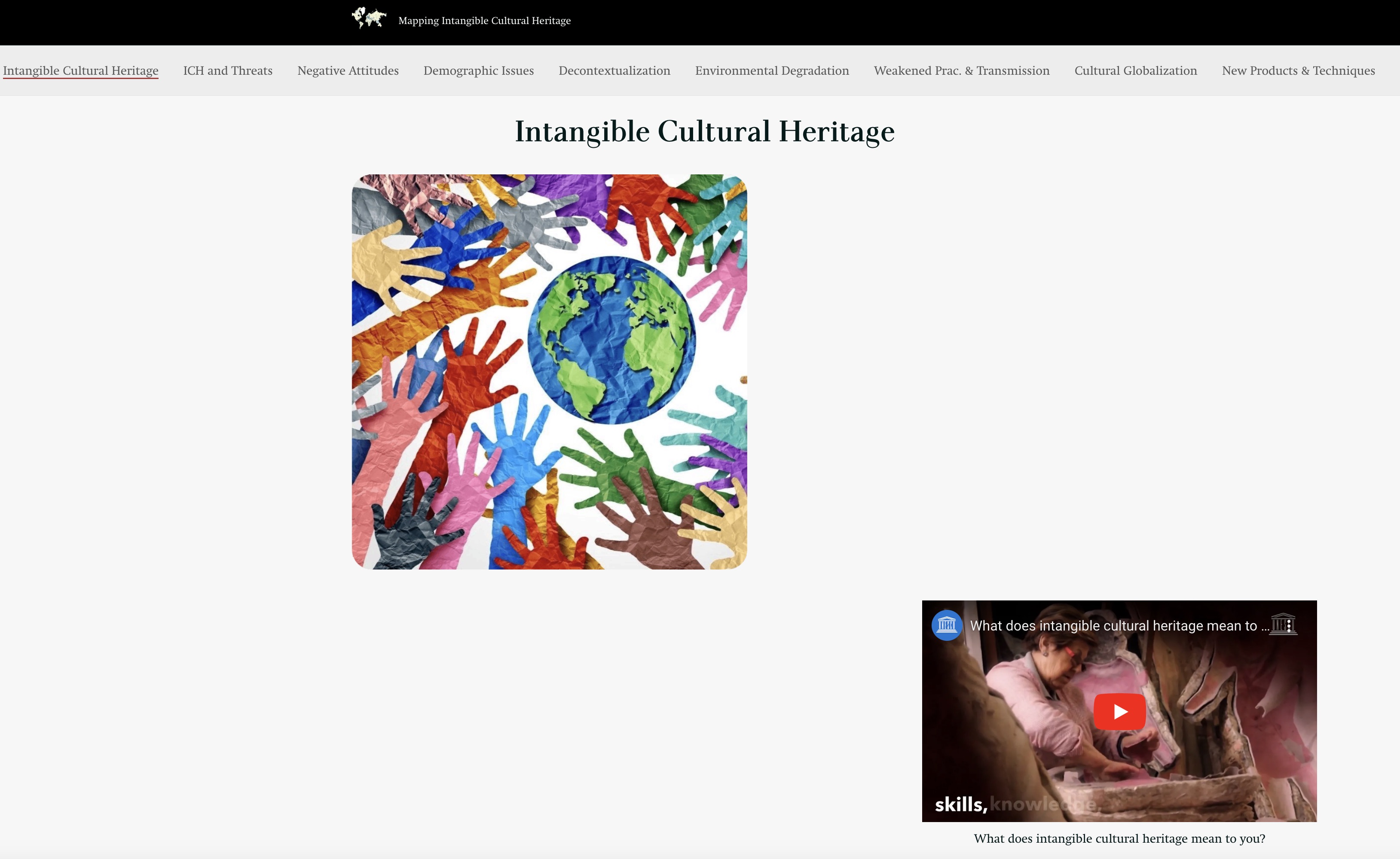
What is Intangible Cultural Heritage?
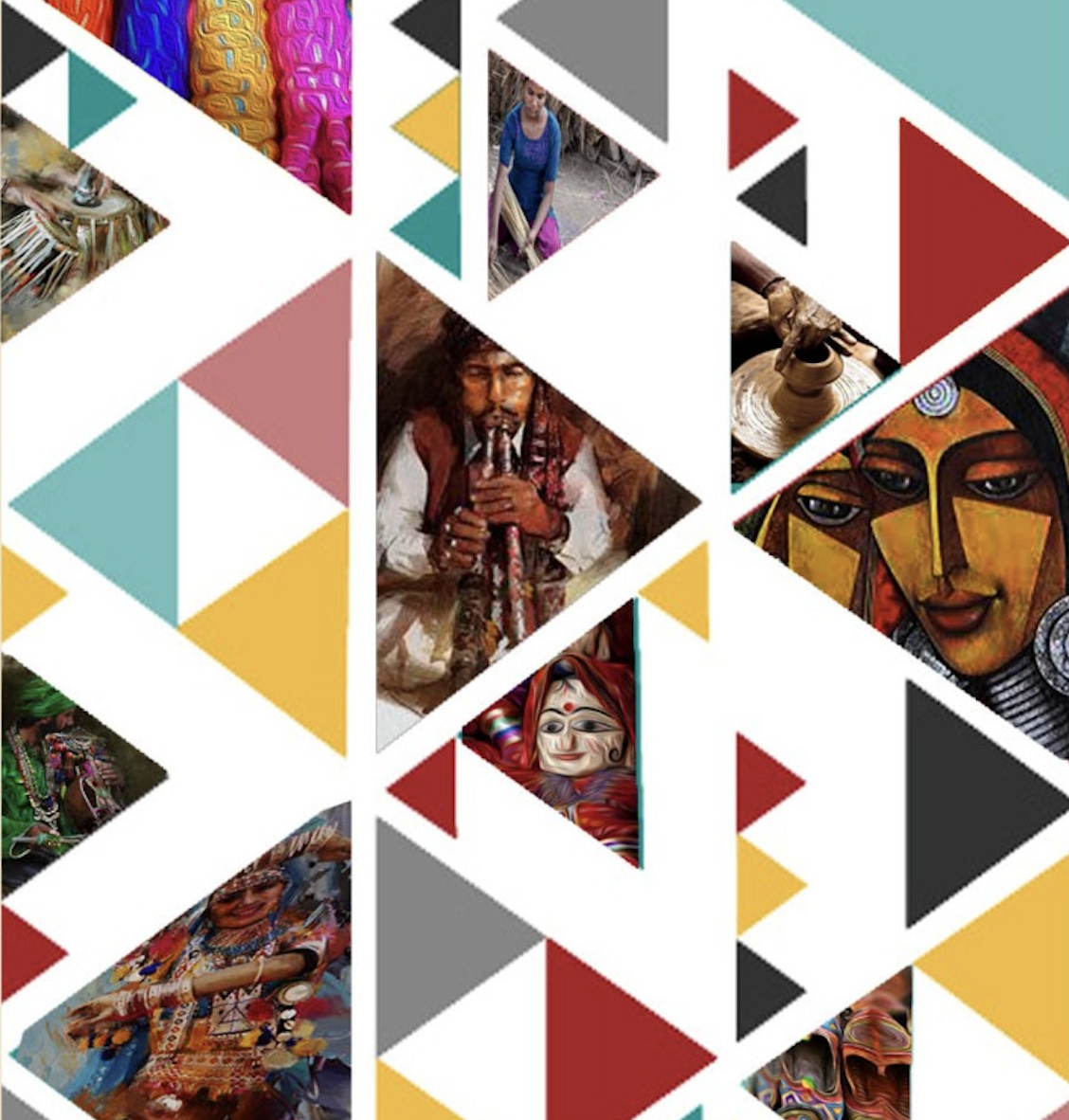
The term ‘cultural heritage’ has changed content considerably in recent decades, partially owing to the instruments developed by UNESCO. Cultural heritage does not end at monuments and collections of objects. It also includes traditions or living expressions inherited from ours and passed on to our descendants, such as oral traditions, performing arts, social practices, rituals, festive events, knowledge and practices concerning nature and the universe or the knowledge and skills to produce traditional crafts.
Why should we safeguard?
Safeguarding intangible cultural heritage is crucial for preserving the unique identities and traditions of communities worldwide. It serves as a powerful reminder of the diversity of human culture, fostering mutual respect and understanding among different societies. By protecting these cultural expressions, we ensure the continuity of traditional knowledge and practices, which often form the foundation of sustainable development for many communities. Additionally, the preservation of intangible cultural heritage promotes cultural exchange and dialogue, contributing to a more interconnected global society built on a foundation of mutual appreciation and respect for diverse cultural perspectives.
What is the Urgent Safeguarding List?
The Urgent Safeguarding Intangible Cultural Heritage List is a mechanism employed by the UNESCO to raise awareness and mobilize international cooperation for the protection of endangered intangible cultural heritage. This list is designed to identify cultural practices, traditions, and expressions that are at risk of diminishing or vanishing entirely. By highlighting these endangered elements, the list aims to encourage urgent measures and initiatives for their safeguarding, thereby ensuring the continuity and vitality of these cultural treasures. Entries on this list often require immediate attention and concerted efforts from various stakeholders, including communities, governments, and organizations, to prevent the irreversible loss of invaluable cultural heritage.
Project Title
Mapping Urgent Safeguarding of Intangible Cultural Heritage
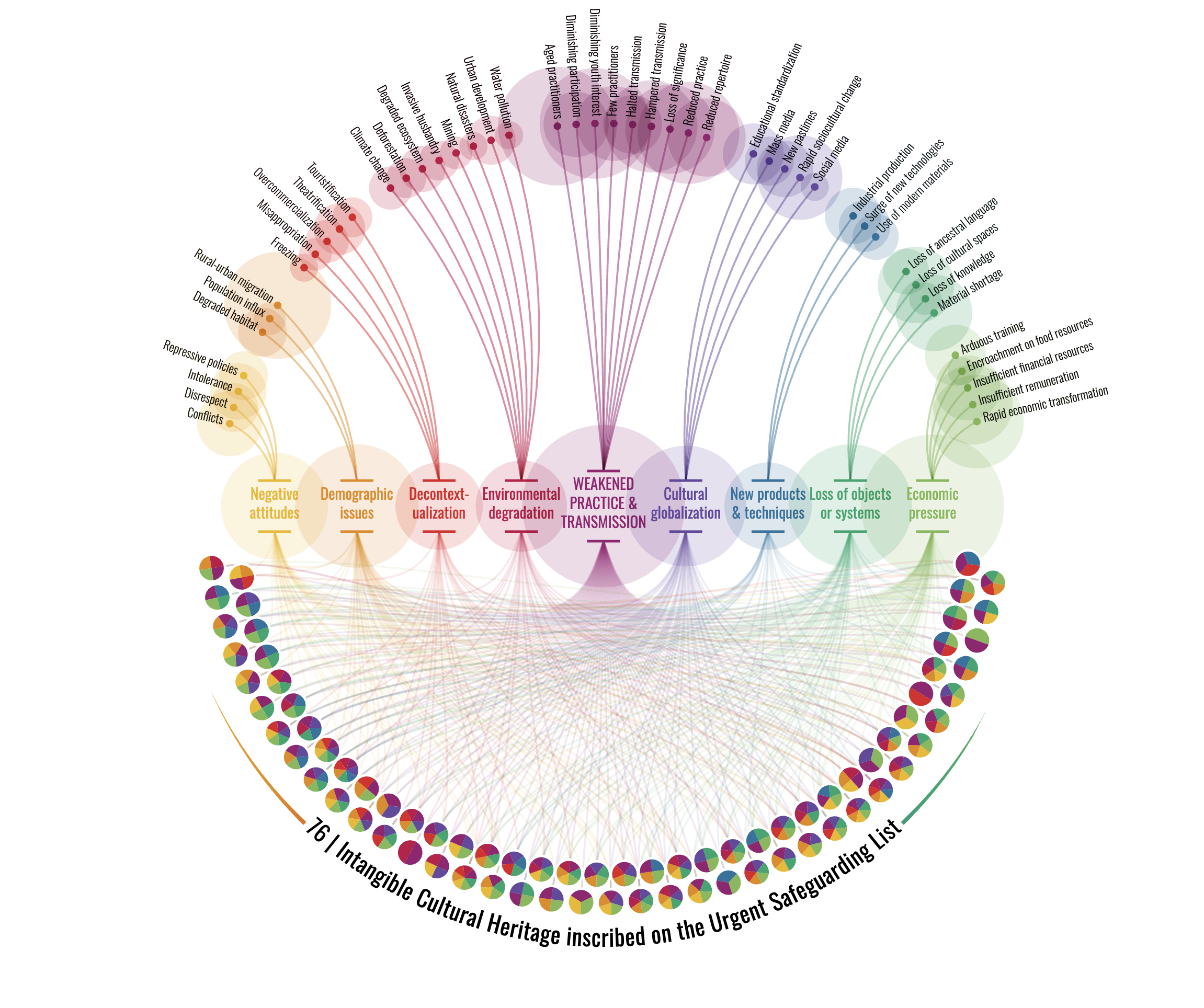
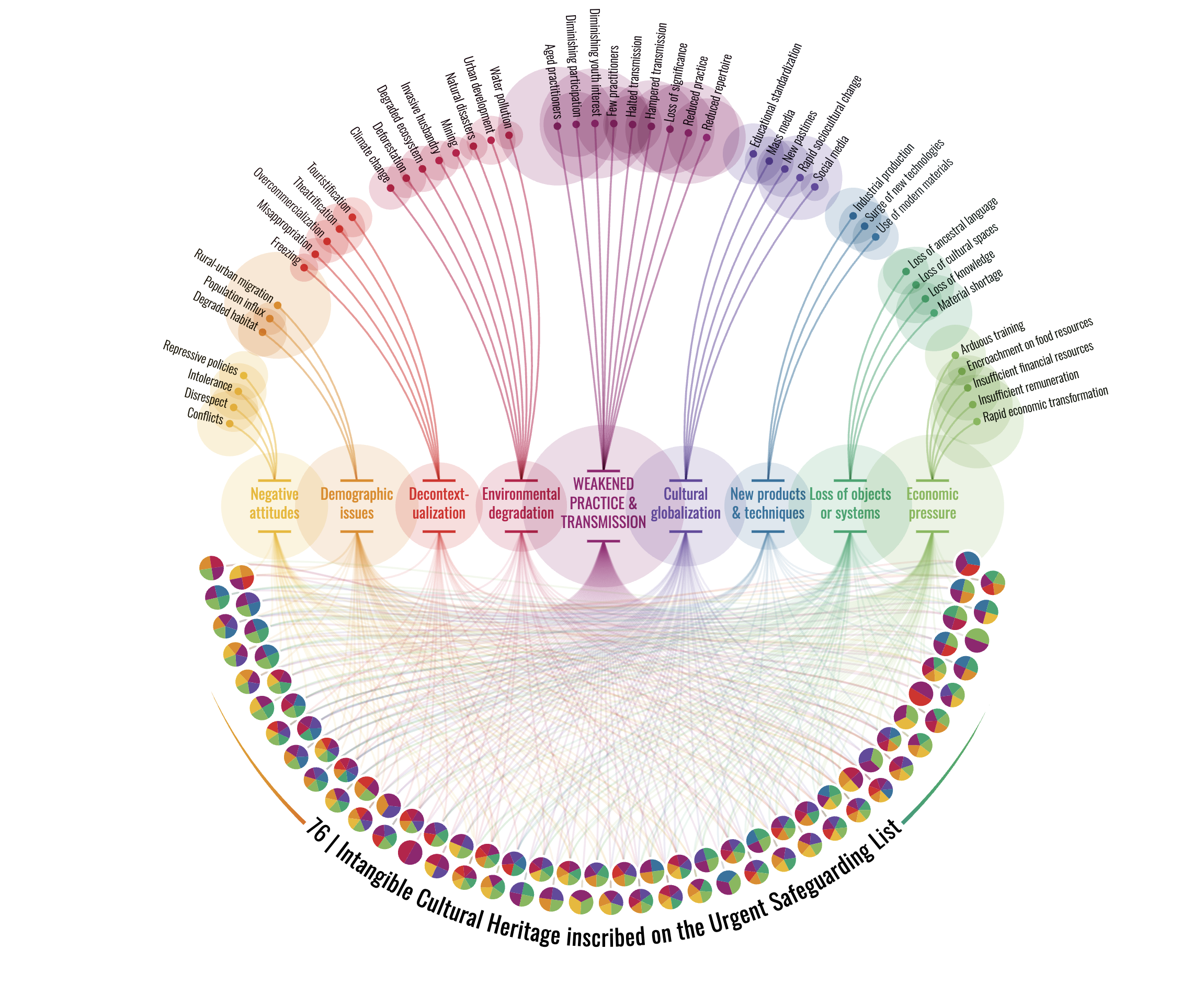
Preserving and safeguarding Intangible Cultural Heritage (ICH) has become a pressing concern in the face of evolving challenges such as negative attitudes, demographic shifts, economic fluctuations, and the impact of globalization. The urgency of protecting these valuable aspects of human culture demands innovative and context-specific solutions. This project aims to utilize Geographic Information System (GIS) technology, specifically ArcGIS, to map and analyze the diverse threats faced by ICH across the globe. By doing so, the project intends to provide a comprehensive understanding of the spatial context of these issues and develop targeted strategies for urgent safeguard.
Introduction
Project Aims and Why Mapping?
The argument in this project revolves around the notion that mapping the threats to intangible cultural heritage (ICH) listed on UNESCO's Urgent Safeguarding List using ArcGIS can serve as a powerful tool to address and mitigate these threats. The core points of the argument include:- Diverse Threats to ICH:
- Spatial Context Matters:
- Tailored Solutions:
- Community Engagement:
- Policy Formulation:
- Global Impact:
Project Process
Data Collection:
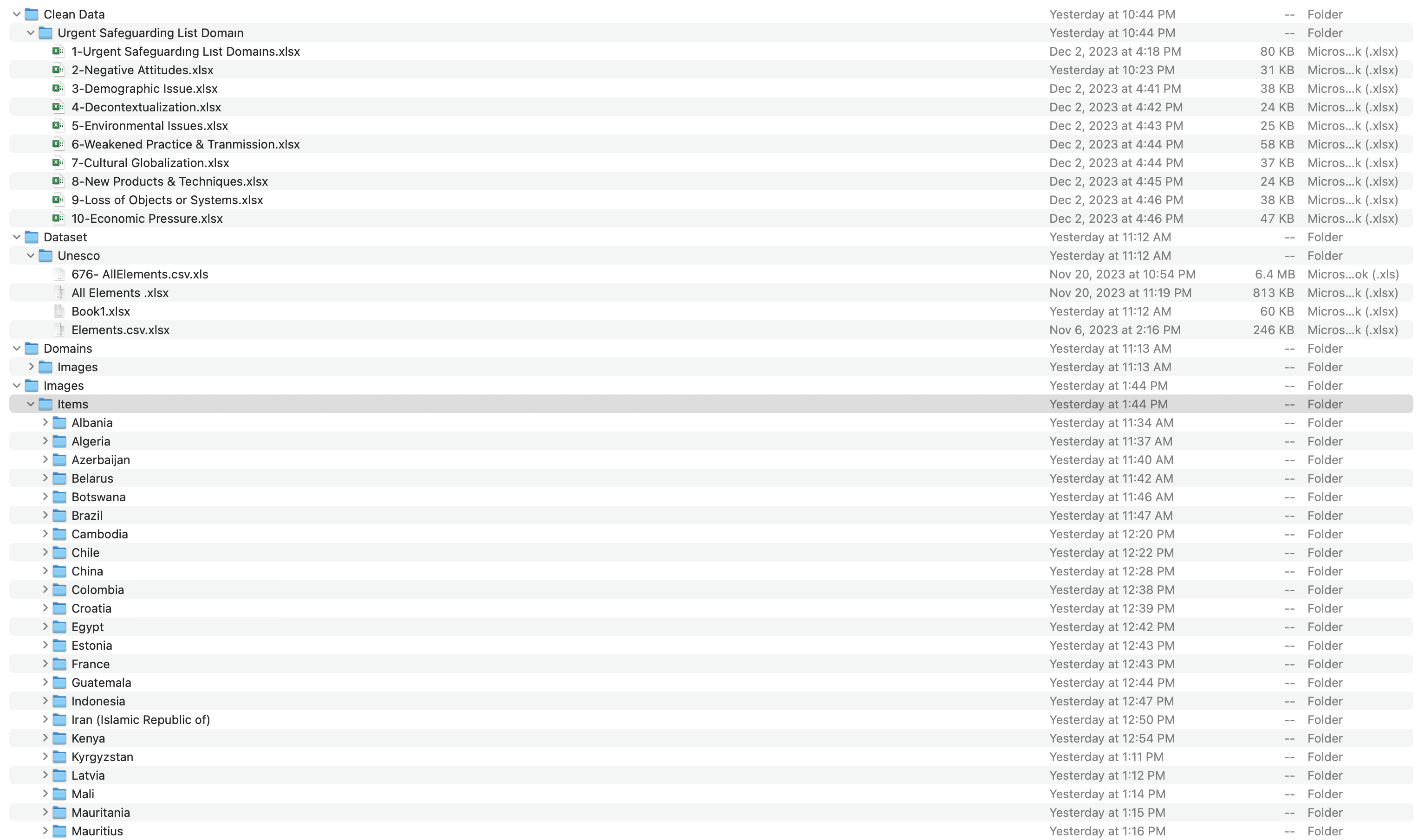
I have collected data from UNESCO and other possible sources. The Urgent Safeguarding List and UNESCO's visualization tools were my main source that shows me a way to gather information about items. I collected databases, economic indicators, and environmental sources, images, videos and so on.
While it is processing, I categorized and labelled data that I cleaned and organized them for using.
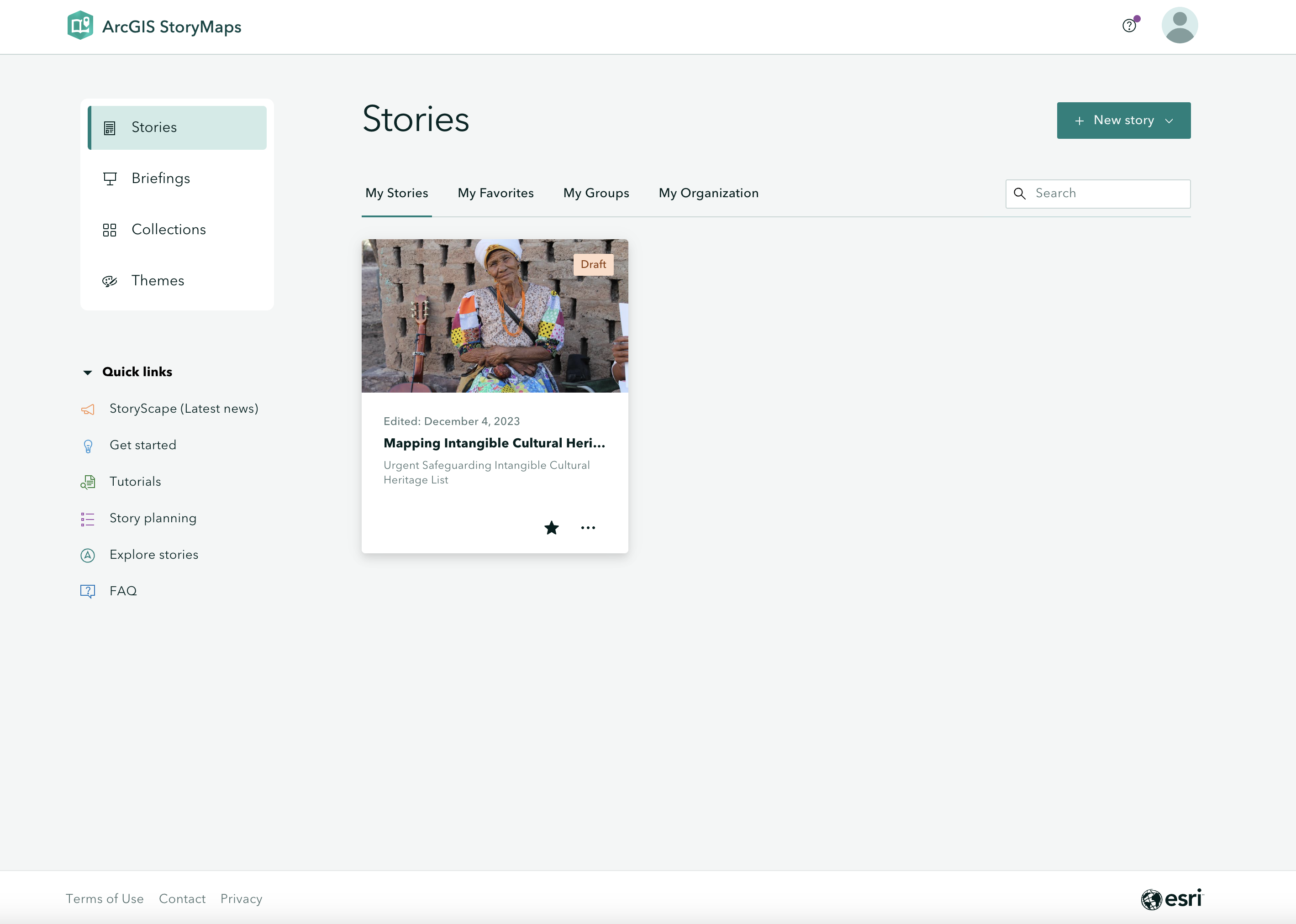
I prefer to sse ArcGIS to create thematic maps representing the distribution of ICH and associated threats. For this step, I attended a few ArcGIS tutorials and I have been trying to become familiar with all functions of the tool. For my current project, the selection of ArcGIS StoryMaps was a strategic decision driven by its unparalleled capability to facilitate deep mapping and offer a rich tapestry of multimedia elements.
GIS Mapping:- Deep Mapping Unleashed:
- Multimedia Symphony:
- Interactive Engagement:
- Seamless Integration of Tools:
- Flexibility for Varied Contexts:
Achievements and Outcomes
The achievements in this project highlight a systematic and effective progression. Commencing with the Project Initiation Meeting, the team successfully defined the project scope, secured professorial support, and established clear objectives. The Methodology Planning Meeting resulted in the development of robust approaches for data collection, GIS mapping, and spatial analysis, ensuring academic rigor with the professor's insights. During the GIS Training Session, the team acquired proficiency in ArcGIS tools, establishing a solid foundation for application. Progress Review Meetings played a crucial role in presenting findings, receiving constructive feedback, and identifying areas for improvement.
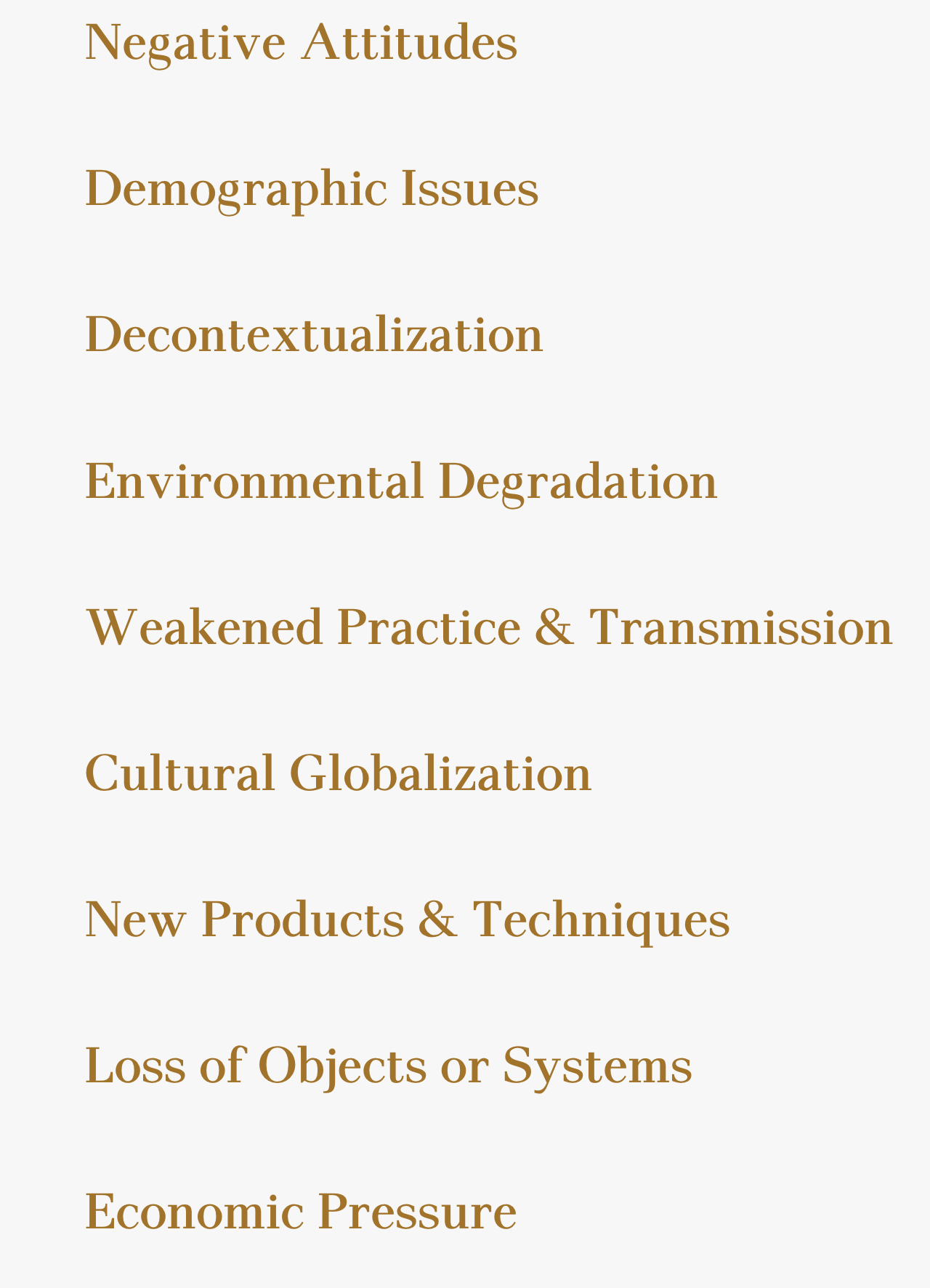
I decided to make a map with nine main domains that show the threats. I have colored my data and divided nine different areas.
The outcome of this project is a nuanced and contextually rich understanding of threats to intangible cultural heritage (ICH) listed on UNESCO's Urgent Safeguarding List. Leveraging Geographic Information System (GIS) technology, particularly ArcGIS, the project has produced comprehensive maps depicting the global distribution of ICH elements and their associated challenges. Through spatial analysis, hotspots have been identified, aiding in prioritizing regions in urgent need of safeguarding measures. Community engagement strategies have yielded valuable insights, ensuring that the proposed solutions are culturally sensitive and responsive to local needs. The project culminates in the formulation of robust policy recommendations, tailored to address specific threats faced by different regions and types of intangible cultural heritage. The creation of an interactive online platform fosters public engagement, allowing users to contribute information and participate in the safeguarding efforts.
Reflection:
The collaboration with the professor shaped a well-rounded and academically rigorous project. Iterative feedback loops ensured alignment with high academic standards, and community input added depth to the research.
What Worked Well:
Clear communication and alignment of project goals with the professor's expertise.
Flexibility to adapt methodologies based on ongoing feedback.
Tutorial for the tool during the project.
What Could Be Improved:
Using tools
Improved documentation of the decision-making process for methodologies.
Future Steps
Refinement of Methodologies:
Address identified areas for improvement based on project reflections. Using tools and project’s content.
Continuous Professor Collaboration:
Establish regular, structured check-ins with the professor to ensure ongoing alignment with academic standards.
Conclusion
Project Significance
This project holds significant academic and practical importance, contributing to the global conversation on cultural preservation through mapping threats and formulating targeted policies. The integration of GIS technology and community engagement reflects a holistic approach to safeguarding cultural diversity.
Personal Takeaways
A valuable learning experience, showcasing the power of interdisciplinary collaboration. The insights gained emphasize the importance of a nuanced, context-specific approach to cultural heritage preservation.
Here is the project link