Vitalize Fairfax
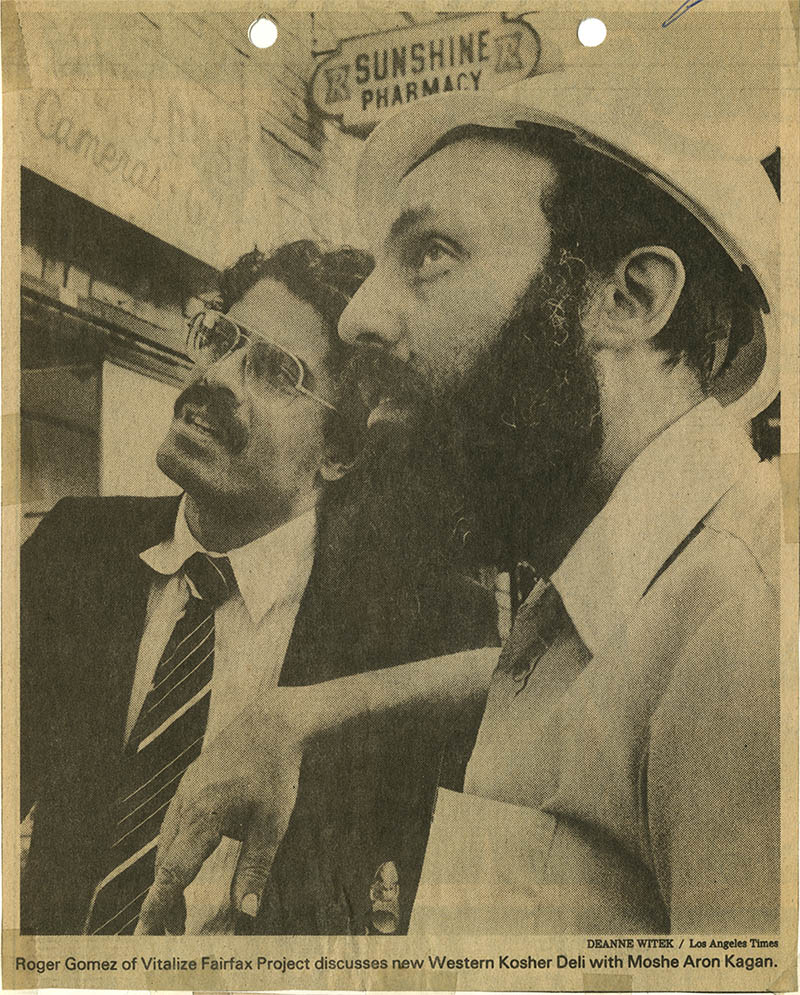
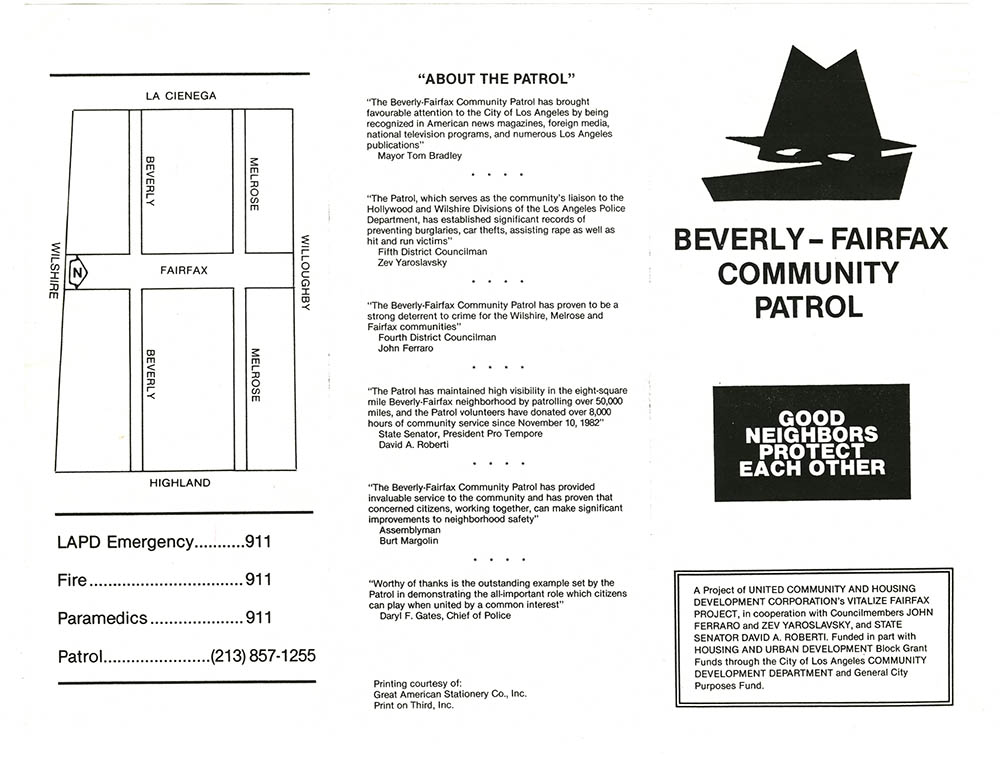
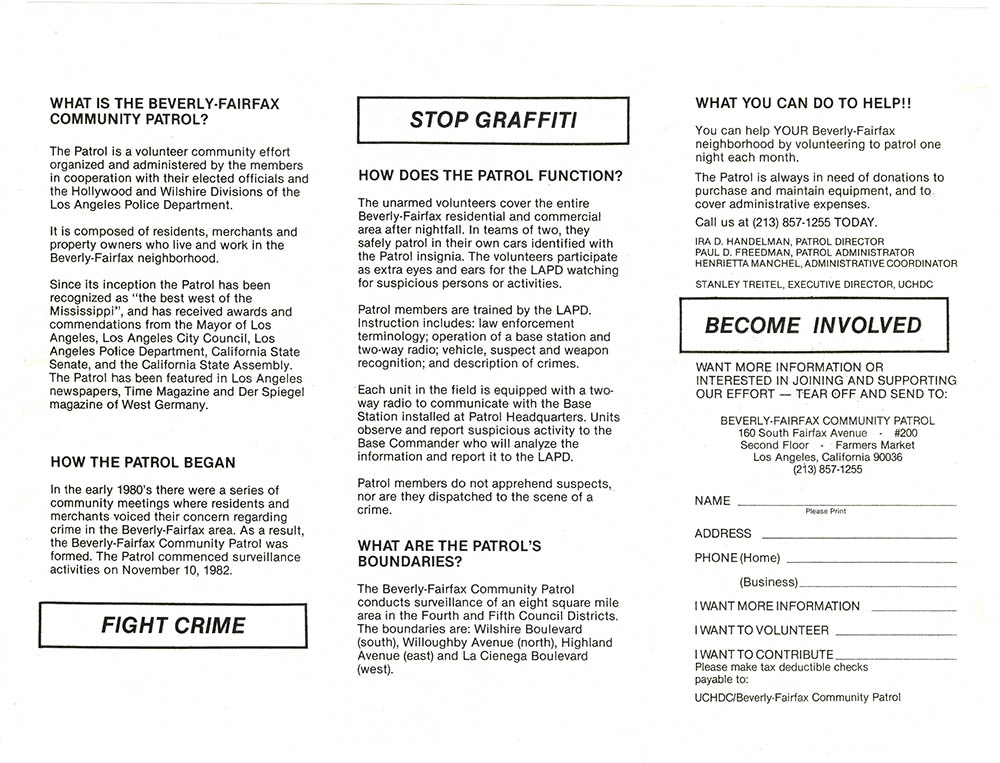
Central to this approach, Councilman Yaroslavsky and YICDC sought to work closely with select community leaders, merchants, property owners, and residents to help guide the revitalization process and decide how an enhanced Beverly-Fairfax should look. To this end, Councilman Yaroslavsky and YICDC established the fifteen member Vitalize Fairfax Citizens Committee. Yaroslavsky and YICDC called upon the group to recommend specific policies, foster volunteer-based models of community engagement, and nurture public-private partnerships that dovetailed with and encouraged revitalization; they also charged the committee with “representing our citizens and the grassroots” and “speaking with one voice for the community.” Some of the project's more notable achievements include securing and processing government loans for small businesses to invest in storefront improvements, helping to establish a local community neighborhood patrol, spearheading an initiative to plant palm trees along Fairfax Avenue, and organizing the Fairfax Community Mural.
While Vitalize Fairfax received much positive publicity, the project revealed and generated sources of tension within Fairfax's Jewish community. A cohort of older businessmen and merchants who were long ensconced in the neighborhood were overwhelmingly suspicious and occasionally hostile toward the Vitalize-led Fairfax Avenue facelifts; they feared that revitalization’s aesthetic enhancements and efforts to attract new, perhaps wealthier consumers might scare away their core customer base — loyal bargain-conscious shoppers. As Henry Goldscher, owner of Henry’s Barber Shop, explained to the Los Angeles Times, “If I put chandeliers, my customers would not come in here. My customers are mostly the old folks…A store, it has to be just the way it was. Believe me, I know. they want to know they can afford it." From the perspective of these storeowners such as Goldscher, the stated long-term benefits of revitalization were not necessarily enticing or clear and were outweighed by its immediate and discernible financial drawbacks.
This page has paths:
- Revitalization and Gentrification Max Baumgarten