In Search of Fairfax
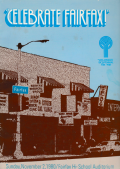
“In Search of Fairfax” explores the history of Beverly-Fairfax, a mid-city neighborhood that the Los Angeles Times has described as “the symbolic focus of Jewish life in Los Angeles,” “the city’s cultural ‘Little Israel,’” “the most Jewish stretch of pavement in Los Angeles,” and the “emotional center of Jewish life in Los Angeles.” While consistently boasting the highest concentration of Jewish residents throughout Los Angeles and a plethora of schools, religious institutions, social clubs, and storefronts that chiefly catered to Jews throughout the latter half of the 20th Century, the neighborhood attracted an array of Jewish and non-Jewish micro-communities and subcultures: upwardly mobile Jewish migrants from Chicago and New York City, lower middle class Jews from Boyle Heights, Holocaust survivors, Soviet and Middle Eastern Jewish immigrants, Chabadnics, Vietnamese refugees, middle class African American families, students attending Fairfax High School, as well as counterculture artists and activists.
Through digital mapping and qualitative analysis, “In Search of Fairfax” examines how Jews and non-Jews alike built communities and interacted with one another in the Fairfax neighborhood from the 1930s through the 1990s. Inter- and intra-group negotiations over the role and structure of this neighborhood generated multiple ideas about the neighborhood’s religious, social, and cultural purpose.
DISCUSS HISTORIOGRAPHY
A few caveats about the methodology and the terminology employed. Throughout most of the project, I refer to the neighborhood under consideration as "Beverly-Fairfax," not the "Fairfax District." The reasons for this are historical: the sources that I came across from the 1950s through the 1980s typically refer to the area as the "Beverly-Fairfax" neighborhood. It was only starting in the 1990s that the term Fairfax District, which is more commonly used today, began to appear with frequency. When appropriate, I refer to the neighborhood as the "Fairfax District." (Going against traditional neighborhood naming practices, most recently, the Los Angeles Times' Mapping L.A. project split the area under consideration into two -- Fairfax and Beverly Grove.)
Also relevant, distinct maps and descriptions provide different boundaries for the Beverly-Fairfax neighborhood. For the purposes of this study, I will use the boundaries that the Vitalize Fairfax project employed--from Wilshire Boulevard north to Santa Monica Boulevard, from La Brea west to La Cienega. For those interested to learn more about how the neighborhood's borders and boundaries have been defined, refer to the Fairfax Maps Resource Guide.
Much of the research for this project was conducted in local archives such as the Barbara Myerhoff papers, the Mayor Tom Bradley Administration papers, 1920-1933, and the Western States Jewish History Archive, 1800-2004; the quantitive data for the maps largely comes from the Jewish community studies conducted by Fred Massarik and Bruce Phillips and U.S. census. While thorough in its analysis, it does not claim to be comprehensive in its treatment of the Beverly-Fairfax neighborhood. I would love to hear comments and feedback about the project. I also encourage individuals to submit additional photographs, essays, and stories about the Fairfax neighborhood; my hope is to develop a section of the "In Search of Fairfax" exhibit that features a range of contributions from those who lived and experienced the Beverly-Fairfax neighborhood For submissions, please email cjs@humnet.ucla.edu.