The Age of World War: World History 1914 - 1945Main MenuWorld Around 1914: GandhiThe World in the Era of Nationalism and Imperialism (1848-1914)The First World WarThe Long Russian Revolution (1917 – 1929)The Decline of the West? Europe from 1919 – 1929A New Middle East: The Rise of the Middle East State SystemChina Between Qing Collapse and WWIILatin America Between Boom and Bust (1911-1929)Africa Under Colonial Rule: Politics and Race from 1914‐1939The United States from The First World War to the Great DepressionThree Varieties of Radicalism in the 1930s: Nazi Germany, Stalinist Russia, and Imperial JapanThree Responses to Modernity: Ho Chi Minh, Ibn Saud and Getulio VargasThe Second World WarSeth Rogofff80e5958d0cba73d55b9580d63378b1ce661a4eb
Introduction
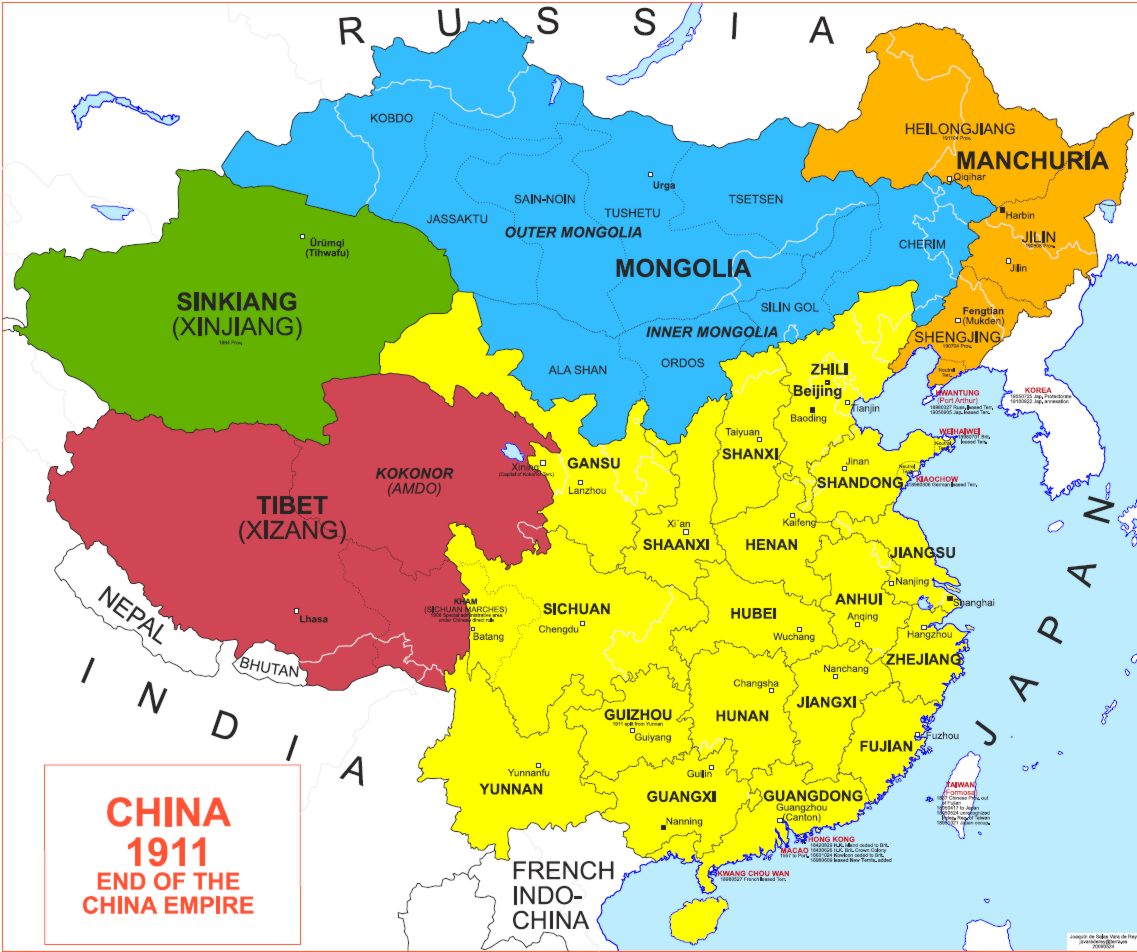
12013-02-21T04:08:23-08:00Seth Rogofff80e5958d0cba73d55b9580d63378b1ce661a4eb2932China Between Qing Collapse and WWIImedia2013-02-23T11:16:40-08:00Seth Rogofff80e5958d0cba73d55b9580d63378b1ce661a4ebThis week we are focusing on the history of China from the fall of the Qing Dynasty in 1911-1912 until the outbreak of the Sino-Japanese War in 1937, which could also be considered the beginning of WWII in the Pacific theater. We will begin in the waning days of the Chinese Empire – the Qing Dynasty, which had ruled China for over 250 years. To understand the profundity of the collapse of the Qing Dynasty on the collective Chinese consciousness, try to imagine what would happen if the current constitutional government of the United States collapsed amid rebellions, foreign invasion and interference, followed by decades of bloody civil war throughout the country. Imagine that at the end of such a time, as a small ray of hope emerged that perhaps a stable (though deeply imperfect) government would unite the country again, the dominant military power in the region (in this case Japan) would unleash a reign of terror on the country that would both shake the will of the country and the collective morality of the world. Imagine at the end of the war against this aggressor that instead of peace, as came to Europe and other parts of the world after 1945, there was more war, this time the end of a protracted civil war between nationalists and communists, ending in the communists’ favor. And imagine that after all of this, this incredible turmoil and hardship, which struck deep down into the daily lives of the people in so many ways, imagine that you would be faced with yet another social upheaval, this time driven by the communist party in an attempt to refashion agrarian, urban, cultural and political life in a Stalinist manner. Such a history is almost unfathomable – and yet this is precisely the history of twentieth century China, the world’s most populace country.
12013-02-18T15:15:25-08:00Seth Rogofff80e5958d0cba73d55b9580d63378b1ce661a4ebChina Between Qing Collapse and WWIISeth Rogoff4plain118572013-02-23T10:53:02-08:00Seth Rogofff80e5958d0cba73d55b9580d63378b1ce661a4eb
This page references:
12013-02-23T11:14:35-08:00Qing Empire in 19111plain2013-02-23T11:14:35-08:00