Take Me to Church
Since Ayatollah Khomeini ascended to power following the 1979 revolution, women in Iran have been forbidden from solo vocal performances in public/in front of mixed gender crowds. This oppressive rule is extrapolated onto Iran’s music industry, in which women almost never record and publish solo vocal performances through well established record labels because a male audience would be able to listen to them. This ban on women's artistic expression contributed to an increase in use of the alternative internet spaces or cyberspaces in which Iranian artists are allowed greater freedoms of expression (Iran Human Rights, 2018).
In multiple articles, Nahid Siamdoust details the political content of music made by artists in Iran, and analyzes the significance of women’s performances as a form of protest in and of themselves, regardless of the lyrical content of the song being performed. Indeed, dance performances, just like vocal performances, performed by Iranian women, even those containing no outward political message, are subject to the same fate as women’s vocal performances in Iran. This demonstrates the true oppressive nature of the laws, which serve only to inhibit women in Iran from flourishing and using their talents to produce art, for the sake of the ideology of the few and powerful.
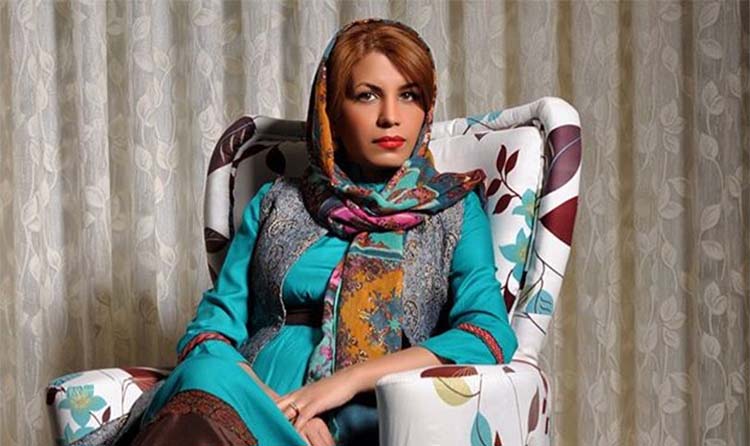
This strangulation of women’s artistic expression has made the few artistic expressions that actually see the light of day all the more important. Rarely seen anywhere except on the internet, female performances have given Women Life Freedom’s musical expression a, “female character,” (Siamdoust, 2023).
The story of Sarina Esmailzadeh reached me this morning, I'm somewhat at a loss for words. We talk about freedoms with no understanding of what it means to pay the ultimate price in fighting for it. This brave girl was only 16 years in the world... https://t.co/I2d4J6WMak
— Hozier (@Hozier) October 7, 2022
Sarina Esmailzadeh’s unperformative performance of ‘Take Me to Church’ by Hozier, an Irish pop singer that has amassed over 1 million followers on ‘X’, garnered mass attention, especially from Western media outlets that identified an overlap of Western culture and Women Life Freedom, ripe for reporting. Her semi-ironic and over-dramatic rendition, featured in her first vlog posted to her YouTube channel in May of 2022, has become a retroactive symbol of Women’s (artistic) liberation in Iran. Following the news of her murder, at the hands of the regime, while participating in a protest, Hozier himself caught wind of the tragedy and posted a 4 part thread to his more than a million followers, which included a link to donate to, and a petition. His first post in the thread, which ‘quote tweeted’ a video of Sarina’s performance, reads, “The story of Sarina Esmailzadeh reached me this morning, I'm somewhat at a loss for words. We talk about freedoms with no understanding of what it means to pay the ultimate price in fighting for it. This brave girl was only 16 years in the world…,” (2022).
The words Sarina sang, 'Let me give you my life', have given her rendition of this song a haunted meaning, in which Sarina's life was given to the movement, as the song suggests. The song's religious themes relate to the view that the religio-political nature of Iranian life has become unlivable, especially for women. The idea that our harmless backseat karaoke performances could end up being our most significant moment should we be killed in protest, has driven many to protest in the name of Woman Life Freedom.
- Hatcher Stanford
References
Amir. 2018. “She’s a Professional Iranian Singer but Is Banned from Singing on Stage in Her Country.” Center for Human Rights in Iran. January 24, 2018. https://iranhumanrights.org/2018/01/iranian-female-vocalist-we-never-get-a-chance-to-practice-our-art-in-a-professional-setting/.
Andrew Hozier-Byrne (@Hozier). “The story of Sarina Esmailzadeh reached me this morning, I'm somewhat at a loss for words. We talk about freedoms with no understanding of what it means to pay the ultimate price in fighting for it. This brave girl was only 16 years in the world…”, X, Oct 7, 2022. x.com/Hozier/status/1578479749050925056?lang=en
sarinacmz. 2022. “My First Vlog!” YouTube. May 16, 2022. https://www.youtube.com/watch?v=4f9G9n_9WkE.
Siamdoust, Nahid. “Women Reclaiming Their Voices for Life and Freedom: Music and the 2022 Uprising in Iran.” Iranian Studies 56, no. 3 (2023): 577–83. https://doi.org/10.1017/irn.2023.15.
This page has paths:
- Soundtracking Woman Life Freedom Hatcher Stanford
- Hatcher Stanford Hatcher Stanford