About
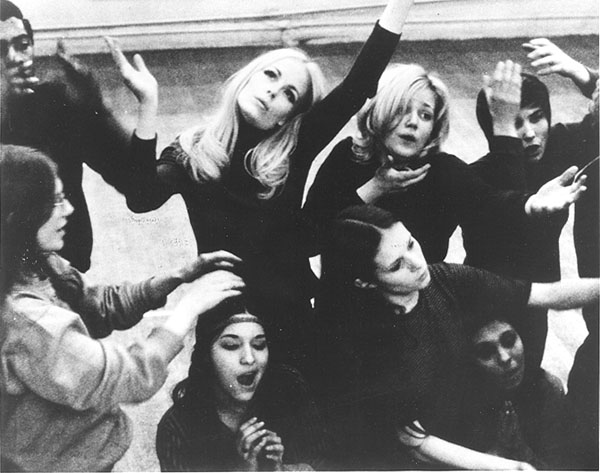
Hair: The American Tribal Love-Rock Musical forever changed American musical theater. A loose collection of sketches about hippie youth, Hair told the story of Claude, a young man who must decide whether to evade the draft, his best friend Berger, an anarchic free spirit, and college activist, Sheila Franklin, their love interest. Written by two successful actors, Gerome Ragni and James Rado, the show was intended to depict contemporary youth culture on stage. It premiered at New York's Public Theater in September 1967. After many revisions to the script, characters, and songs, it became a Broadway smash, running at the Biltmore Theater from April 1968-1972. Touring productions, local performances, and international versions meant that from the late 1960s to the early 1970s, Hair was everywhere.
This digital essay will focus on the character of Sheila Franklin, the female lead. More than any other character, Sheila underwent dramatic changes as the musical moved from idea in its creators' minds to an off-Broadway and then Broadway production. Examining these changes gives insight into how cultural producers negotiated the sexual revolution for varying audiences at the exact moment that feminists were creating the women's liberation movement as a reaction, in part, to their experiences with men in the civil rights movement, the New Left, and the counterculture. From script to script, Sheila shifts from a shrewish pawn of Berger's to a woman involved with two men, one of whom is killed in Vietnam. While this transition would seem positive, in actuality it shows how the authors, producers, and directors downplayed conflicts between men and women in the counterculture as they made the show palatable for broader audiences.

This digital essay will focus on the character of Sheila Franklin, the female lead. More than any other character, Sheila underwent dramatic changes as the musical moved from idea in its creators' minds to an off-Broadway and then Broadway production. Examining these changes gives insight into how cultural producers negotiated the sexual revolution for varying audiences at the exact moment that feminists were creating the women's liberation movement as a reaction, in part, to their experiences with men in the civil rights movement, the New Left, and the counterculture. From script to script, Sheila shifts from a shrewish pawn of Berger's to a woman involved with two men, one of whom is killed in Vietnam. While this transition would seem positive, in actuality it shows how the authors, producers, and directors downplayed conflicts between men and women in the counterculture as they made the show palatable for broader audiences.
Discussion of "About"
Add your voice to this discussion.
Checking your signed in status ...