Communication and Technology
Switchboards
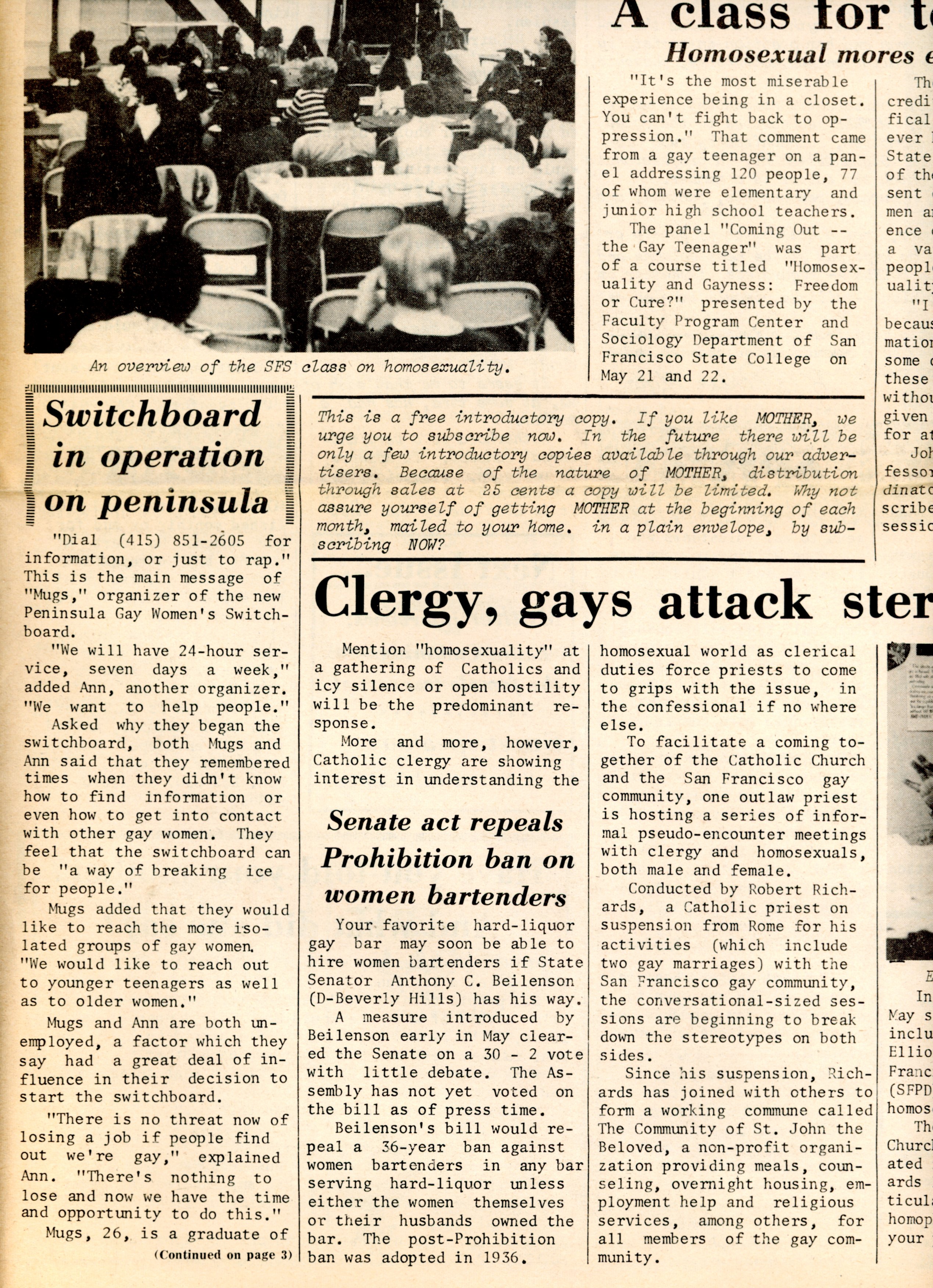
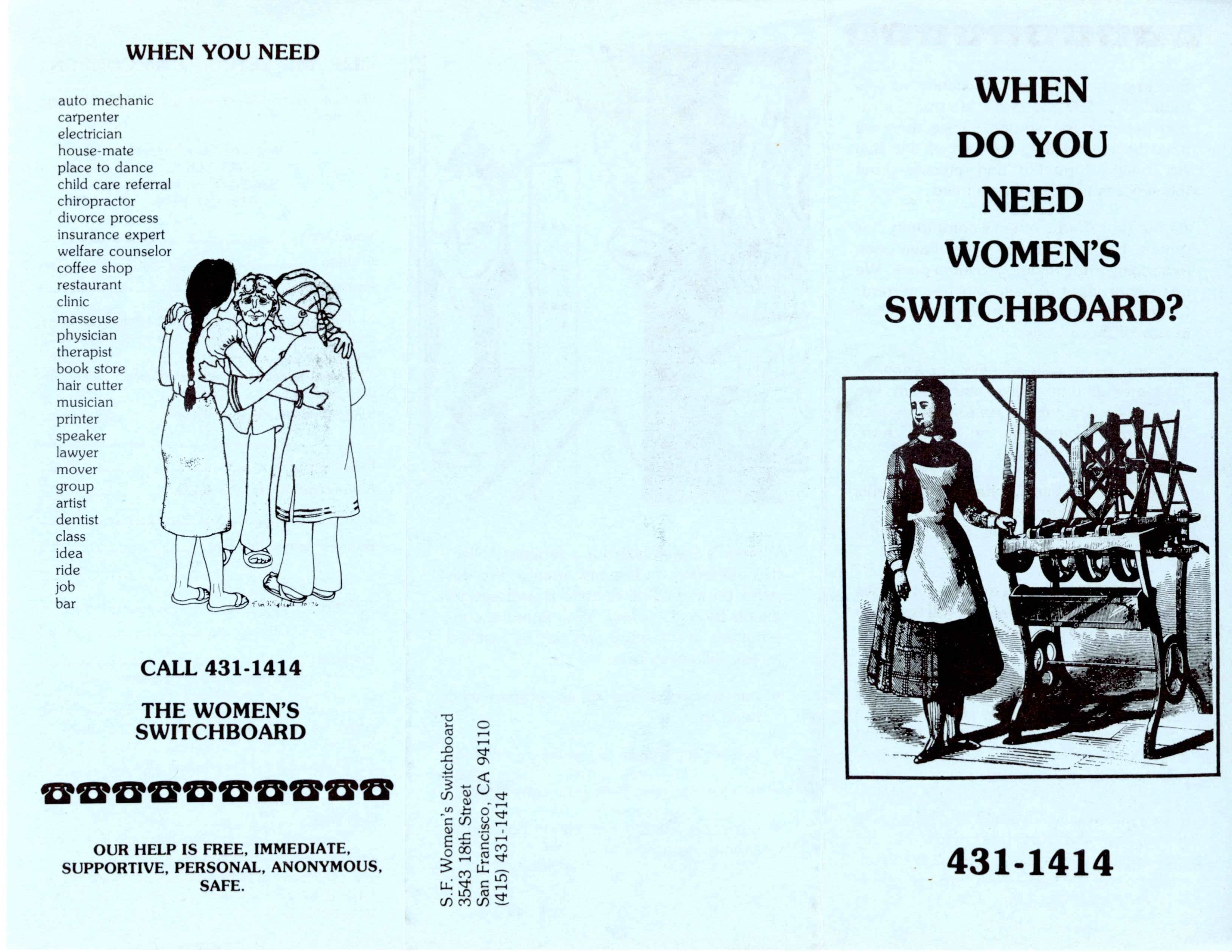
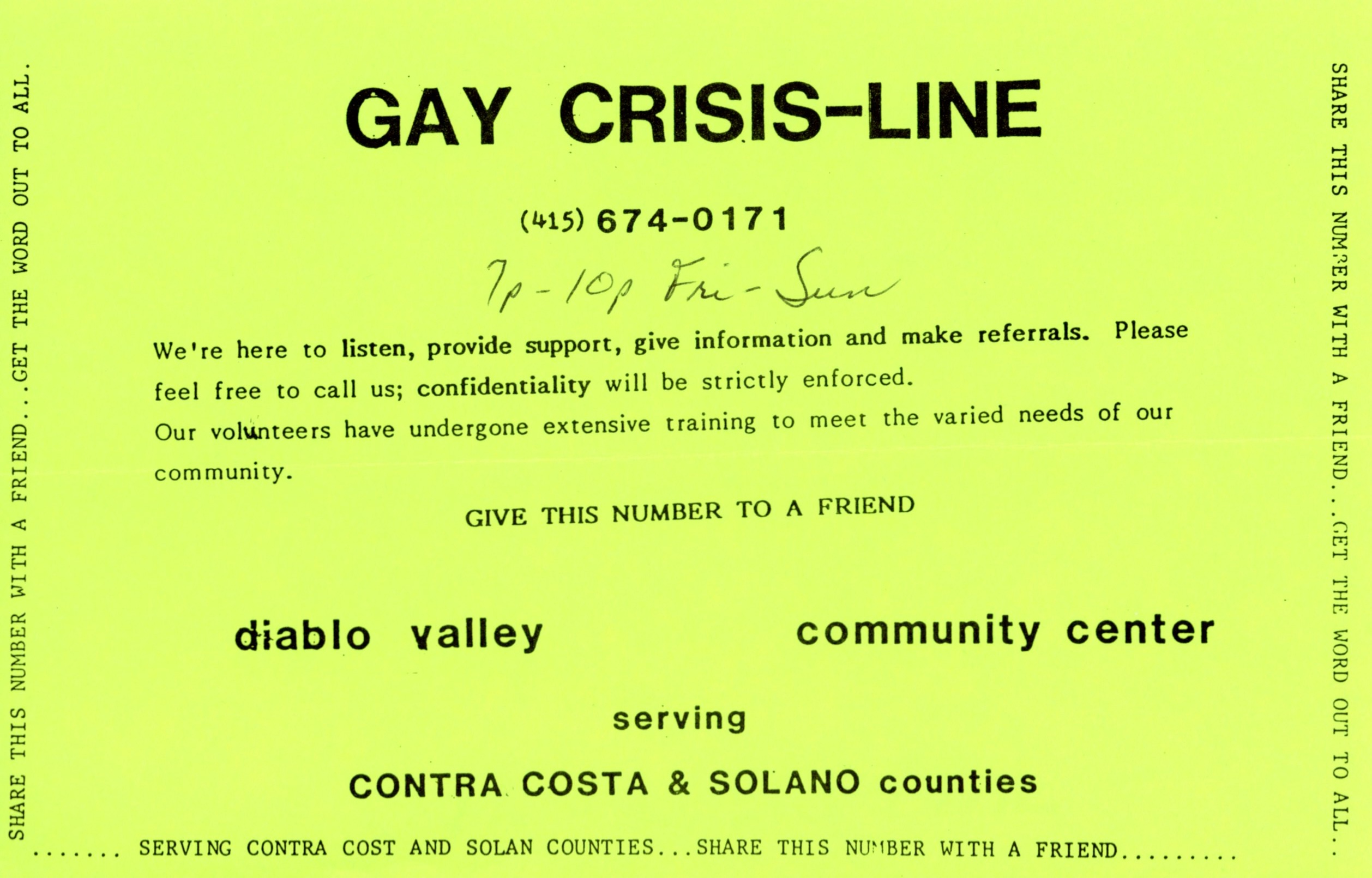
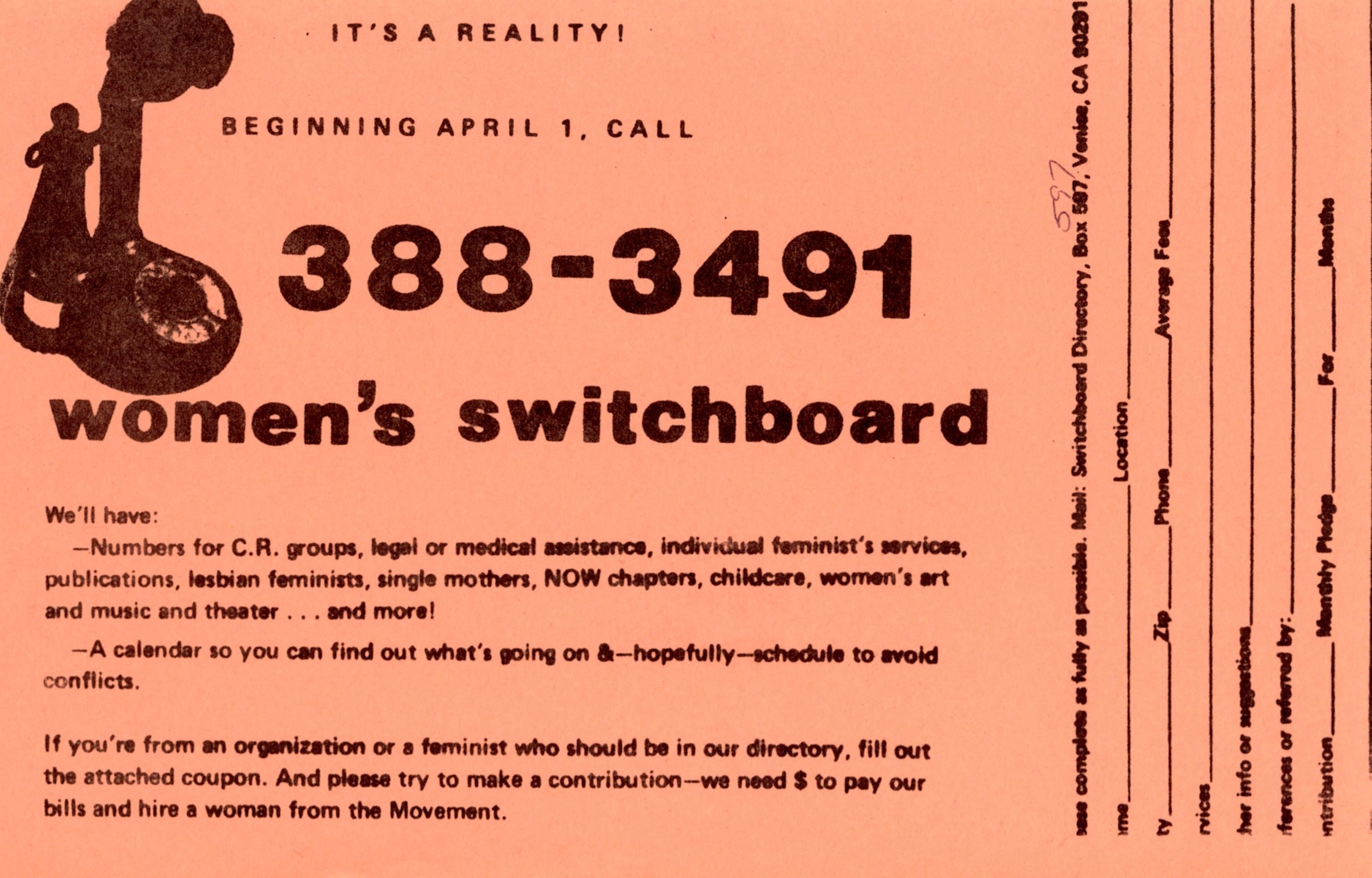
Communication networks for queer people before the Internet often took the form of switchboards, which functioned as information call centers and helplines pointing people to resources. The largest Gay and Lesbian Switchboards were in New York City and London. In New York, the Gay and Lesbian Switchboards operated separately from 1971 to the mid-1980s, when the Lesbian Switchboard, operated out of the Women’s Liberation Center, and the Gay Switchboard, operated by members of the Gay Activists Alliance, Beyond, and the Gay Liberation Front out of the Liberation House Gay Collective, merged into one at the New York LGBT Center.[1] The helpline still functions today, with the same phone number, through the LGBT National Help Center with the same number.In California, switchboards for lesbians and gays, or just women, were started but folded after only a few years. There seemed to be many of them, operating locally between San Francisco and the Bay Area, down to Los Angeles. The San Francisco's Women’s Switchboard operated from 1972 to the early 1980s, first operating out of the San Francisco Women’s Center, and then the San Francisco Women’s Building.[2] The Peninsula Gay Women’s Switchboard operated out of Redwood City, CA and had the hopes of unifying “all bay area switchboards,” as told in Mother magazine in 1985. In LA there are ads for a Lesbian Switchboard operating out of the Westside Women’s Center, the Women’s Switchboard with a home base in Venice, and various help and crisis lines.
Lesbian and gay mailing networks were also popular, and usually associated with specific organizations or political events. Other types of mailing lists were commercial databases designed to sell products aimed at LGBTQ people. Strubco, Sean Strub’s mailing database was one of the largest lists of gay U.S. households, and offered product catalogs, Community Cardpack for men and Sapphile for Women, and sold these lists to other direct-mail marketers.[3] Strubco compiled these lists partly by using political events, like the March On Washington, essentially capitalizing on activists and queer people coming together over common political goals.
Personal Computers
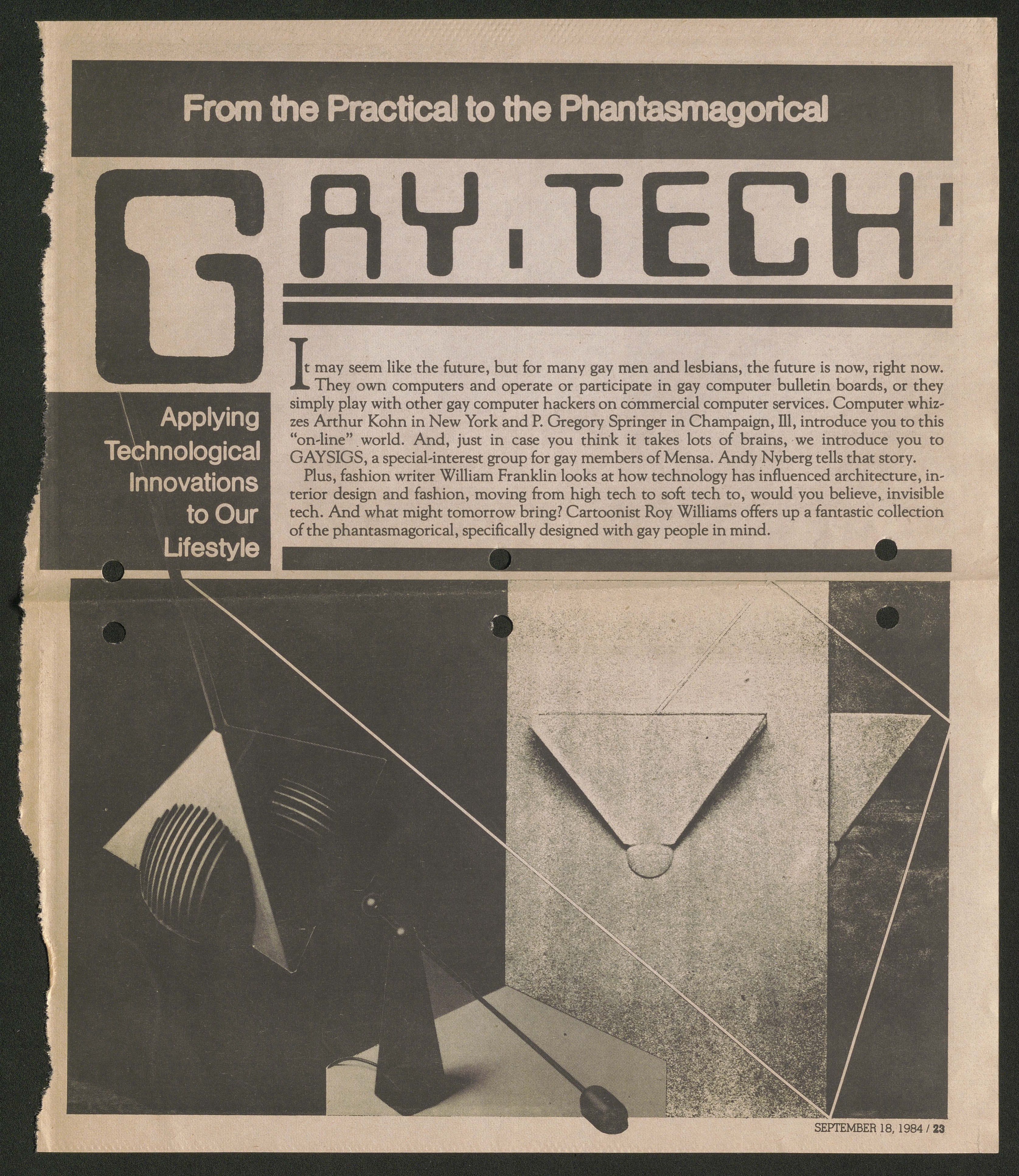
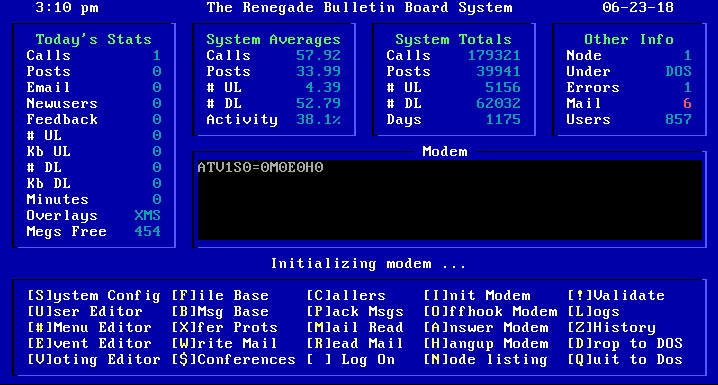
As personal computers (also called microcomputers) became more widely used, but still before the Internet as we know it, computer bulletin board systems (BBS) allowed people to chat, play games, read news, download or upload data, and read message boards. This was done by connecting your computer to your phone line (for those of us that still remember landlines). To join you need the phone number of the BBS, and sometimes an access code.[4] The Advocate talks mostly about BBS for gay men, reporting that out of 2,000 BBS, about 24 are gay. The gay BBS range from ways to meet other men, read porn, find AIDS health tips, advice columns, news on gay computing, and places to cruise in person.[5]Does anyone remember using BBS in the 80s? I wonder what other early queer and lesbian BBS existed? What were the online communities rallied around and discussing? If you have any BBS stories, the Mazer would love to hear them.
A similar article in The Advocate published alongside the one on gay BBS, is titled, “Computer Sex and How to Get it.” It tells the reader that just like the BBS, all you need for sexual experimentation is some computer equipment and a phone, a coming-out process that rivals that of the closets of the 1950s and having to hide gay books and magazines in your room.[6] Unlike a BBS, which usually cannot handle many users accessing a board at the same time and will run up the phone bill, this article highlights commercial information centers. In one, called “The Source,” the international database available to users has a “switchboard” that allows subscribers to list their name, interests, and then communicate with each other, though it costs $10.00 per hour.[7] In both of The Advocate articles, cyberbullying and homophobic views making their way into these gay computer spaces was only mentioned once, as occasional occurrences. To protect these spaces sysops monitored and filtered content; or sometimes a password was required for entry, meaning that access to that password would have to come through either a personal network, or the right online connection.
The ability for computers to connect people and create networks of support or common interest was perhaps the most exciting thing about their use. The Advocate reported that 21% of their readers, who are primarily LGBTQ, own personal computers; this is four times the national rate of personal computer ownership.[8] For those feeling like they were the only lesbian or gay man on earth, it opens the possibility of finding connection and other people like them, in a targeted way without the fear of retaliation that could occur in person. Other computer networks that are less used for sexual or romantic connections are PLATO, the Gay Press Association, and the Gay News Information Communications Network. These networks have increased the speed at which gay political news travels, which before was often through the mail and taking up to two months to reach people.[9]
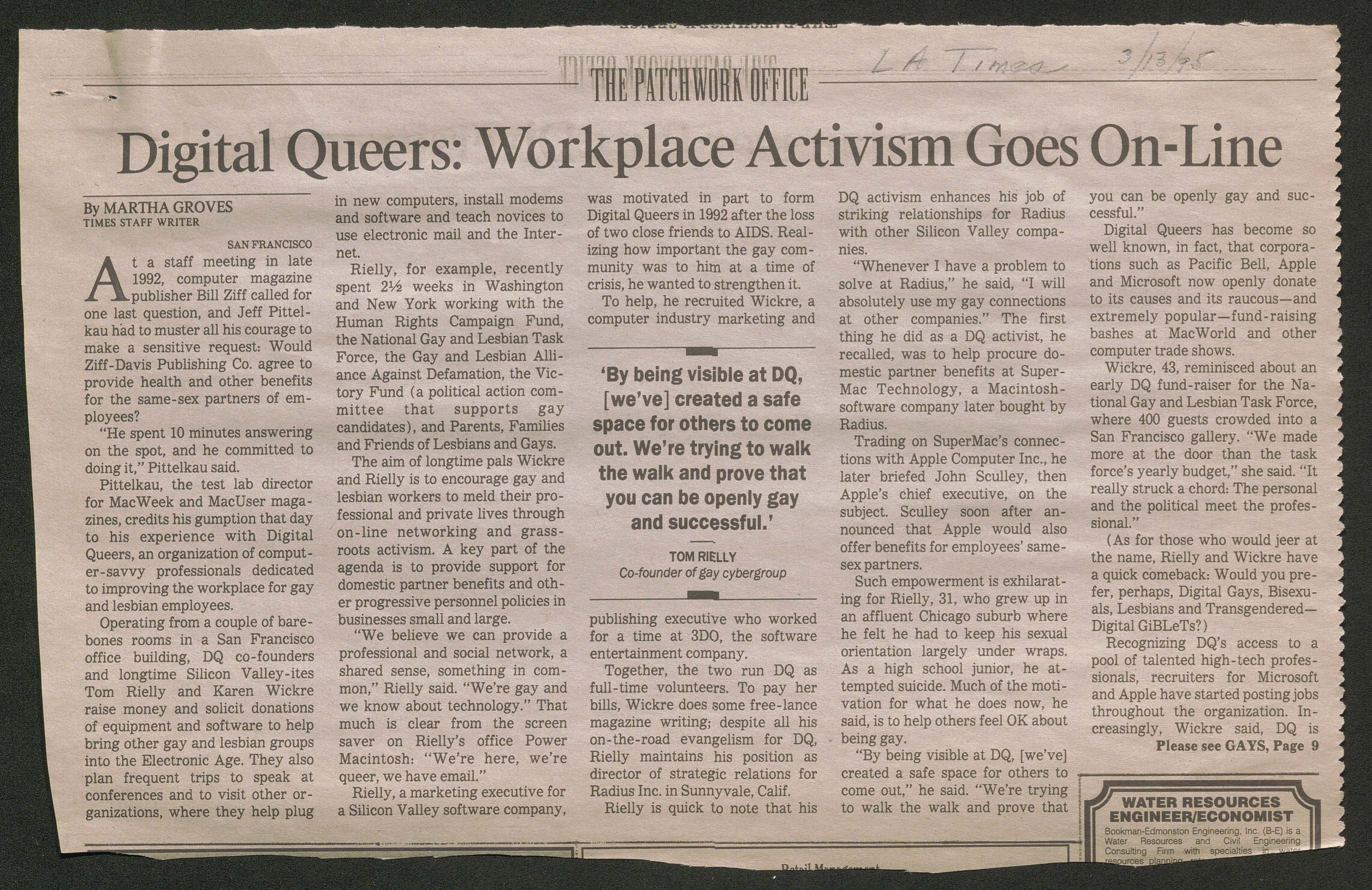
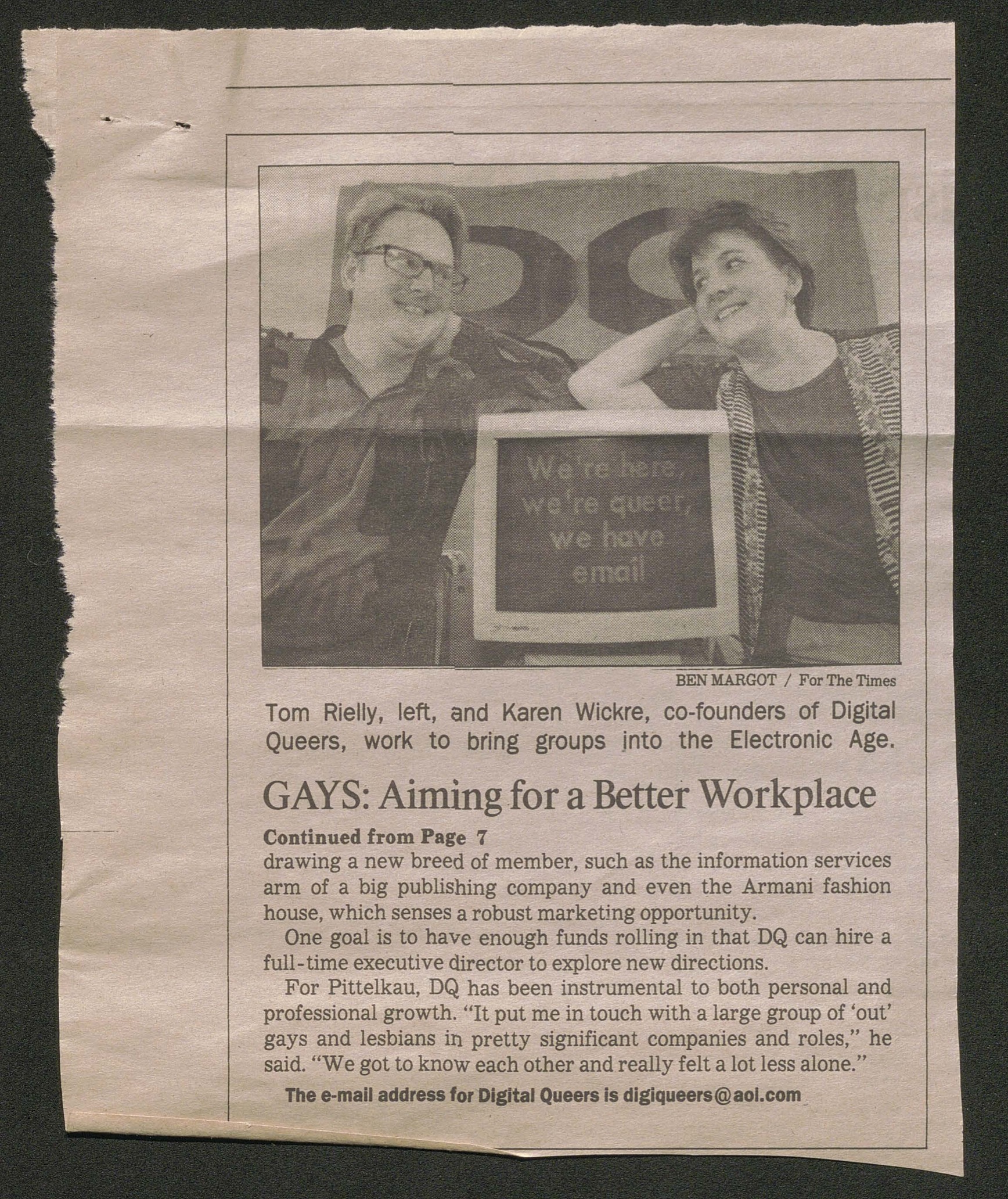
Some of these social networks also manifested as advocate groups for LGBTQ people. Digital Queers was a group that helped raise money, distribute technology, and educate queer people in the "electronic age." The group's goals involved providing support through online networking and activism to encourage LGBTQ people to come out at work, and in turn ensure those workplaces have policies that support LGBTQ people, like providing domestic partner benefits. The group frequently worked with the Human Rights Campaign Fun, The National Gay and Lesbian Taskforce, the Gay and Lesbian Alliance Against Defamation, and the Victory Fund, also receiving donations from Apple, Pacific Bell, and Microsoft.
Some other items from the Subject Files are evidence of the good old analog chain letter. Many of us know the version sent through email, but its original form happened through the US Postal Service.
Citations
[1] Amanda Davis, “Women’s Liberation Center,” NYC LGBT Historic Sites Project. https://www.nyclgbtsites.org/site/womens-liberation-center/; Stephen Greenberg, “Historical Note,” International Gay Information Center, Inc. Gay Switchboard of New York, Inc. Records, 1972-1983 Finding Aid, The New York Public Library Manuscripts and Archives Division, New York, New York.
[2] Sushawn Robb, Mothering the Movement: The Story of the San Francisco Women's Building (Outskirts Press, 2011), 11-13.
[3] Alexandra Chasin, “Interpenetrations: A Cultural Study of the Relationship between the Gay/Lesbian Niche Market and the Gay/Lesbian Political Movement.” Cultural Critique, no. 44 (2000): 157. https://doi.org/10.2307/1354605.
[4] Bryan Lunduke, “History of computers, part 1 — The bulletin board system,” NetworkWorld, August 28, 2017. https://www.networkworld.com/.
[5] Arthur Kohn, “Bulletin Boards for Gay Computer Hackers,” The Advocate, September 18, 1985, 24-25.
[6] P. Gregory Springer, “Computer Sex and How to Get it,” The Advocate, September 18, 1985, 28.
[7] P. Gregory Springer, “Computer Sex and How to Get it,” 27.
[8] Ray O’Loughlin, “Gays Take a Byte out of Tomorrow with Computer Networking,” The Advocate, September 16, 1982, 38-40.
[9] Ray O’Loughlin, “Gays Take a Byte out of Tomorrow,” 40.
This page has paths:
- Highlights from the Subject Files Bonnie Morris/Julia Tanenbaum/Angela Brinskele