Wilbur F. Storey
1 2015-10-19T03:15:53-07:00 Claire Staveski fd4448269ba1d9180643996c497c3b954e2e9635 5977 1 1870 plain 2015-10-19T03:15:53-07:00 ICHi-21288 Chicago History Museum Claire Staveski fd4448269ba1d9180643996c497c3b954e2e9635This page is referenced by:
-
1
media/lydia and her girls_OR.jpg
2015-10-19T03:52:25-07:00
The British Blondes and The Media
8
gallery
2015-10-21T13:00:15-07:00
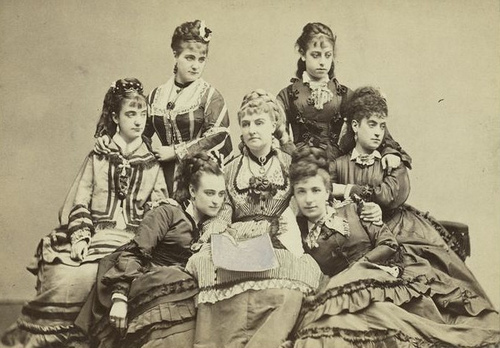
Lydia Thompson and the British Blondes hailed from London, and had remarkable success in Europe, receiving great reviews and huge turnouts. In 1868, Thompson and her troupe sailed to America and started performing in New York where they soon became the most popular troupe and form of entertainment. At first the media waxed poetic about the blondes. Wilbur F. Storey, owner of the Chicago Times, is quoted saying Thompson “possessed all the qualification for a pleasing actress in light comedy characters”, which was quite a pleasing review. Many similar articles were published along the same lines.
Later, when some unfavorable letters came about in the Chicago Times, stating that what these women were doing onstage was immoral, Thompson responded by saying burlesque was “harmless entertainment” and not morally wrong (Allen, 19). Then, somehow, public perception changed, with a back and forth of critical and supporting views. Storey responded to Lydia’s remark by saying her troupe “have made an unnecessary and lewd exhibition of their persons, such as would not be tolerated by the police in any bawdy house; that they have made use of broad, low and degrading language, such as men of any self respect would repudiate, even in the absence of ladies; that their entertainments have been mere vehicles for the exhibition of coarse women and the use of disreputable language unrelieved by any wit or humor” (Allen, 19). Thompson responded by going to his house with some of her troupe, including her publicist Archie Gordon, who held Storey while Thompson and fellow member Pauline Markham horsewhipped Storey at gunpoint. They were charged with assault and were fined and allowed to walk free. This caused a media storm and the audience to continue to grow for Thompson's shows. Shows sold out constantly, causing the troupe to be arrested when riots would break out outside the theatre. When Thompson was asked to comment on her and her troupes actions in regard to Storey, Thompson responded with, “The persistent and personally vindictive assault in the Times upon my reputation left me only one mode of redress… They were women whom he attacked. It was by women he was castigated… We did what the law would not do for us” (Allen, 20).
It wasn’t just Storey who had a problem with Thompson and her British Blondes. Actress Olive Logan protested as well, "I cannot advise any woman to go upon the stage with the demoralizing influence which seems here to prevail more every day, when its greatest rewards are won by brazen-faced, stained, yellow-haired, padded-limbed creatures, while actresses of the old school – well trained, decent – cannot earn a living"(Hoffos, 7). Logan believed Thompson and Co. made a mockery of the stage. As a women’s activist, Logan thought Lydia and her troupe were not helping women progress in a positive way, insisting that they brought women down and showed them as immoral creatures. Despite the backlash, Thompson and the blondes faired remarkable well in America before returning to Europe and picking back up where they left off.