Thanks for your patience during our recent outage at scalar.usc.edu. While Scalar content is loading normally now, saving is still slow, and Scalar's 'additional metadata' features have been disabled, which may interfere with features like timelines and maps that depend on metadata. This also means that saving a page or media item will remove its additional metadata. If this occurs, you can use the 'All versions' link at the bottom of the page to restore the earlier version. We are continuing to troubleshoot, and will provide further updates as needed. Note that this only affects Scalar projects at scalar.usc.edu, and not those hosted elsewhere.
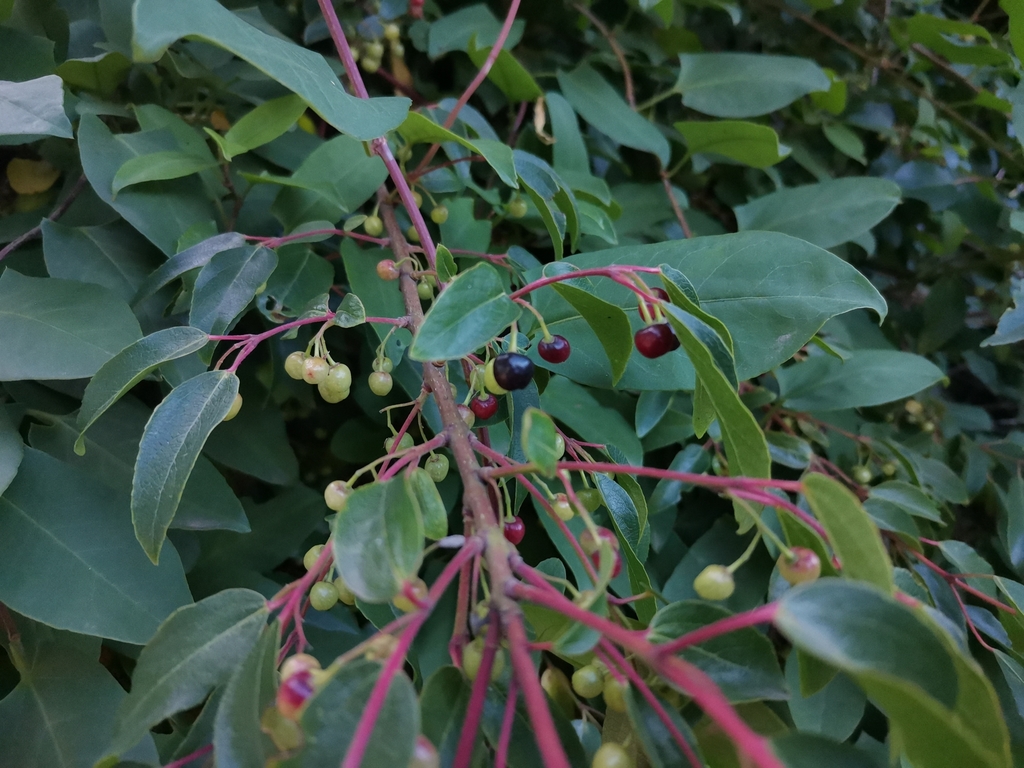
12022-05-11T11:35:50-07:00Ariela Navasartianb706ff98a2718db176cb67e8d717a47ed8c4b6c0406882Picture provides an illustration of the stem, leaves, and berries #wineberryplain2022-05-29T07:38:28-07:00Ariela Navasartianb706ff98a2718db176cb67e8d717a47ed8c4b6c0
12022-05-11T11:17:26-07:00Paria Maghsoudi2fd8384def30ded736cc804c59ed30f65fb62a49Aristotelia chilensis: The Super FruitAriela Navasartian23by Paria Maghsoudi, Ariela Navasartian #wineberryplain2022-05-29T08:10:52-07:00Ariela Navasartianb706ff98a2718db176cb67e8d717a47ed8c4b6c0
This page is referenced by:
12022-05-11T11:17:26-07:00Aristotelia chilensis: The Super Fruit23by Paria Maghsoudi, Ariela Navasartian #wineberryplain2022-05-29T08:10:52-07:00Abstract:
Nomenclature History: The plant Aristotelia Chilensis, also known as the Maqui and Chilean Wineberry, originating from Chile was discovered by the Botanist Molina Stuntz. The berry can also be referred to as “maquei”, “quelon”, “quelron”, “koelon”, or “clon”. These names are usually derived from the Mapuche tribes who occupy reservations in Chile and who use the Maqui berry regularly.
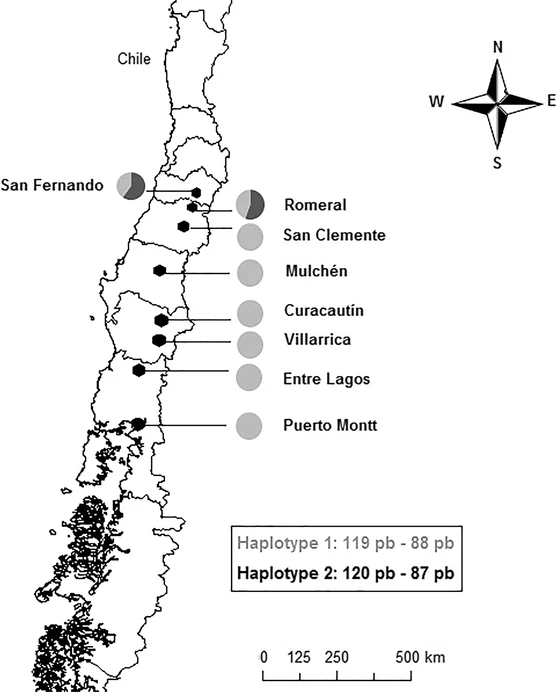
Evolutionary History: The evolutionary history of the plant is that it originates from the Patagonia Andean forests. The plant belongs to the Elaeocarpaceae family and the Aristotelia genus. It shares dinucleotide sequences with the European alder, the Vaccinium macrocarpon-which is a cranberry-, and the mung bean (Vigna radiata). However, according to the article written by Gianoli et al. its sister group is the Eucryphia cordifolia which is part of the Cunoniaceae Family.
Ecology & Life History: The Berries are grown and harvested in the Chilean lands, and have remained preserved since their cultivation. The berry is sacred to the Mapuche Indians and so throughout its history, they have fought for it to remain in the sacred grounds. The habitat in which it thrives must be in edaphoclimatic conditions. The Chilean wineberry grows best in rich moist soil on the side of hills or edges of forests. It can branch out into new locations with grazed land and cultivate there. The plant can flourish in hot dry areas and temperate rainforests. On the other hand, due to its high genetic diversity, it can survive in less than ideal conditions. The high genetic diversity is from the way it pollinates, which is through wind and distribution by insects.The life history of these plants have been related to the Mapuche tribe. Its antioxidant, medicinal properties, and flavor have been very useful to these people and so they have ensured the growth of them for centuries. They even have a century-old ancestral tradition of harvesting this berry, and so, have made the Maqui berry a sacred plant. As far as the research collected, the phylogenetic tree of these plants has many gaps in them. Specifically, there was no definitive wild type of Aristotelia Chilensis found. There are some close relatives as described before but the wild type of the plant is mostly unknown.
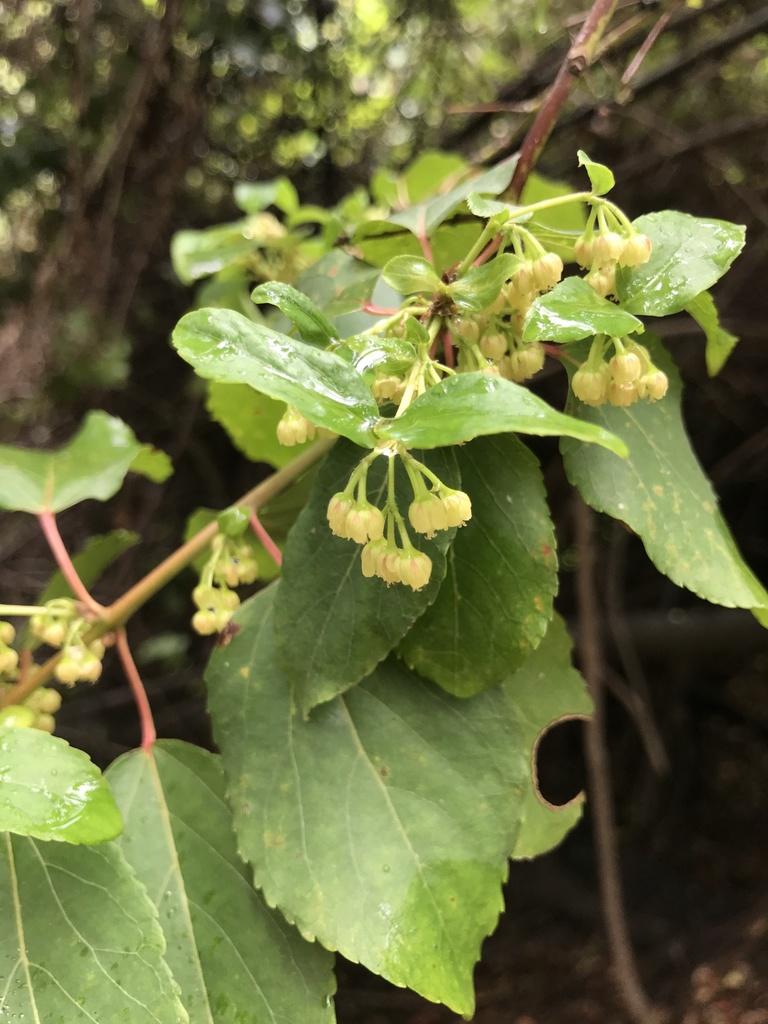
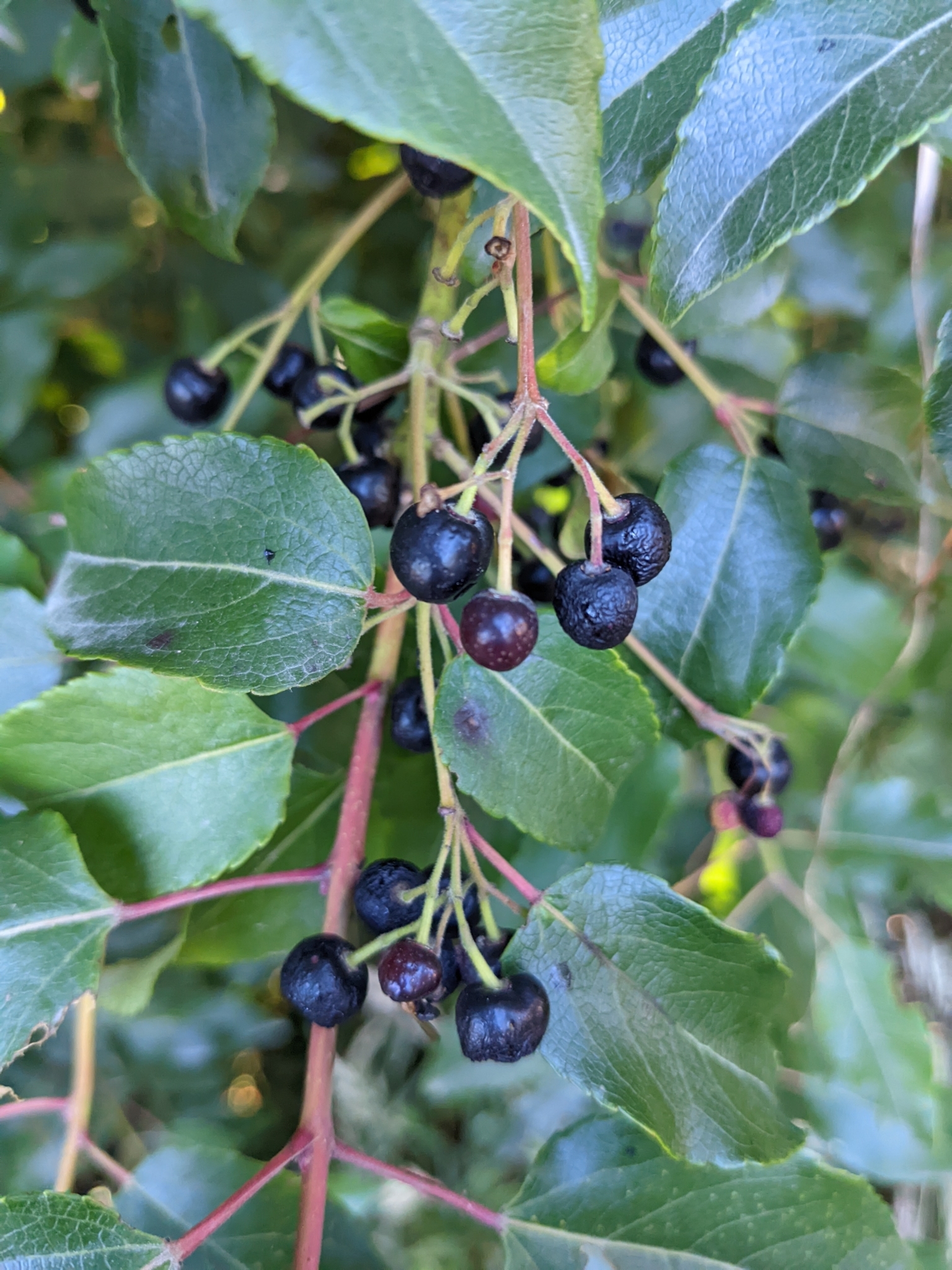
The Morphology (Vegetative & Reproductive): The Morphology of Aristotelia chilensis is of a dioecious shrub with small white/yellow flowers, mature purple berries, green simple leaves, and red colored petioles. It grows up to 3-4m during its lifetime. This evergreen plant is dioecious but does not practice self fertilization. Instead, it uses its reproductive parts, the flowers, to attract insects and bees for cross pollination. A hermaphrodite flower morphology with unisexual functionalit has also occured. The flowers are of light yellow color and are in clusters. The flowers are facing towards the ground instead of up as to help the insects with pollination. The berries of the Maqui berry plant start off small, with green colors. Once Spring rolls around, the plant loses its vegitative state and becomes floral, while growing its berries. The berries turn into a dark purple color once they are in their mature forms. The Lanceolate leaves are a dark green color, with serrated margins, thin and flexible branches and are used to protect the plant while also conducting photosynthesis. There is not much information on the roots of this particular plant. However, an article written by Vogel et al. states that the roots will decrease in size when the flowering season begins because it is when the soil begins to dry due to the hotter temperatures. Historical Accounts:
Bastías, Adriana, et al. “Identification and Characterization of Microsatellite Loci in Maqui (Aristotelia Chilensis [Molina] Stunz) Using next-Generation Sequencing (NGS).” PLOS ONE, Public Library of Science, https://journals.plos.org/plosone/article?id=10.1371%2Fjournal.pone.0159825.
Gianoli, Ernesto, et al. “Woody Climbers Show Greater Population Genetic Differentiation than ...” Research Gate, 2016, https://www.researchgate.net/publication/308675275_ Woody_climbers_show_greater_population_genetic_differentiation_than_trees_Insights_into_the_link_between_ecological_traits_and_diversification.
Salgado, Paola, et al. “Genetic Variability of Aristotelia Chilensis (‘Maqui’) Based on AFLP and Chloroplast Microsatellite Markers - Genetic Resources and Crop Evolution.” SpringerLink, Springer Netherlands, 15 Feb. 2017, https://link.springer.com/article/10.1007/s10722-017-0498-0.
Suwalsky, Mario, et al. “Human Erythrocytes Are Affected in Vitro by Flavonoids of Aristotelia Chilensis (Maqui) Leaves.” International Journal of Pharmaceutics, Elsevier, 16 July 2008, https://www.sciencedirect.com/science/article/pii/S0378517308004948.
“Taxonomy Browser (Aristotelia Chilensis).” National Center for Biotechnology Information, U.S. National Library of Medicine, https://www.ncbi.nlm.nih.gov/Taxonomy/Browser/wwwtax.cgi?id=138855.
Tea, Rishi. “The Wild Maqui and Murta Harvest in Chilean Patagonia: Rishi Tea & Botanicals: Origins.” Rishi Tea & Botanicals, 16 Feb. 2021, https://journal.rishi-tea.com/chilean-patagonia-maqui-and-murta-harvest/.
Vogel, Hermine, et al. “Maqui (Aristotelia Chilensis): Morpho-Phenological Characterization to Design High-Yielding Cultivation Techniques.” Journal of Applied Research on Medicinal and Aromatic Plants, vol. 1, no. 4, 2014, pp. 123–133., https://doi.org/10.1016/j.jarmap.2014.09.001.