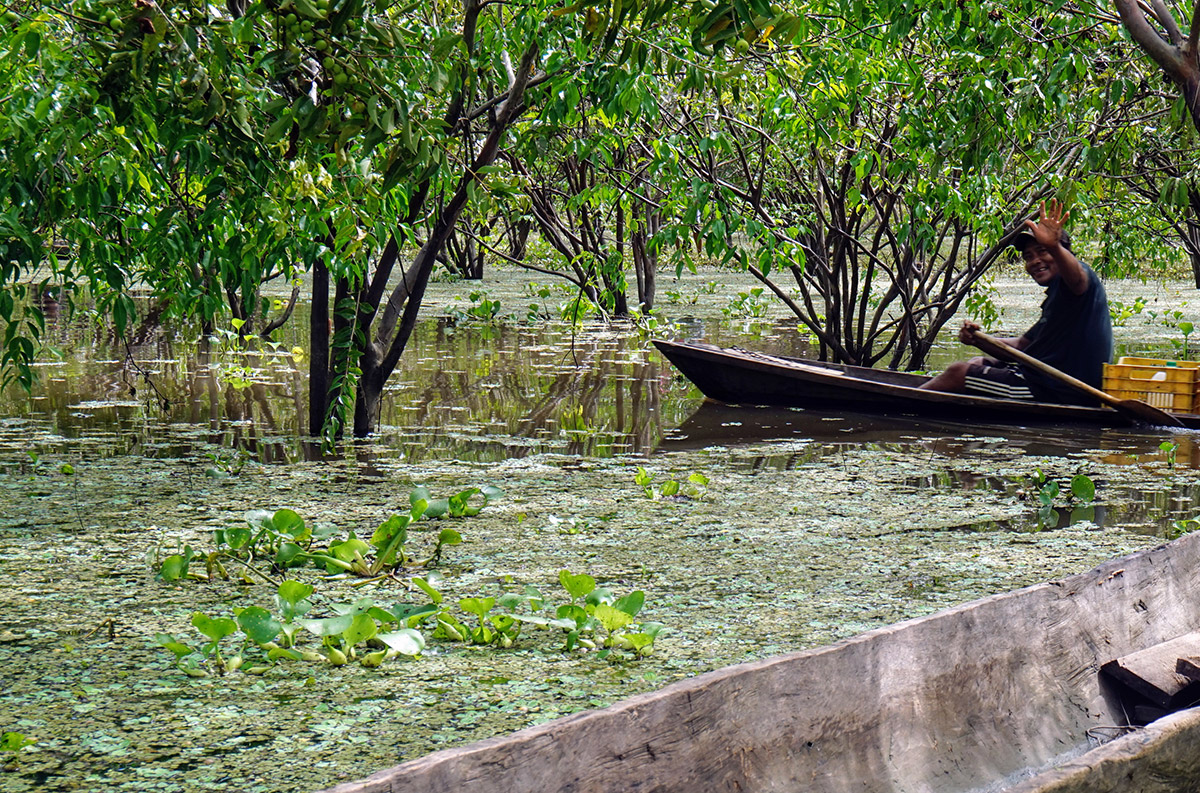
Camu Camu: The Super Fruit of the Amazon Basin
The berries of the camu camu plant can be consumed, although the high acidity makes them difficult to eat alone (except to the Indigenous people). In cities near the ‘agricultural’ sites, it is common to consume camu camu berries in sweet drinks or on ice cream. For non-indigenous people, the berries are also processed into a powder, which can be ingested with a liquid, or other foods. The camu camu berry is unique in its extremely high vitamin C content, with 100x more vitamin C compared to an equal quantity of oranges. The berries also contain small amounts of various essential amino acids, essential fatty acids, minerals, and vitamins. The tree bark of camu camu plants can also be made into a poultice and applied to wounds to prevent infection (Camu-Camu Berries: History, Gastronomical Uses and Nutrition, 2012). Additionally, the leaves can be used as an herbal remedy (Engels & Brinckmann, 2012).
Cultivation Practices: Where, how and by whom are the plants grown?
Camu camu plants are grown historically along the banks of rocky rivers and lakes of the Amazon Basin River system. The plant is harvested during the wet season, when the trunks are submerged several feet of water. The berries are harvested by guiding canoes through the branches, collecting the berries by hand. There is no mention of the historical Indigenous groups who cultivated the camu camu plant, but the Yanomami and Kayapo peoples have been living in these areas for thousands of years.
Domestication History
While the domestication history of the plant is still largely unknown, there seems to be some wild and domesticated cultivars of camu camu plants. Genetic analysis has revealed that there are no major differences between wild and artificial/domesticated camu camu plants. It is worth noting that many of the wild patches of camu camu plants are upriver of the domesticated plants, possibly explaining the genetic similarity and allowing the wild population to remain genetically separated from the domesticated patches (Šmíd et al., 2017).
Historical Accounts
The fruit of the camu camu plant has been harvested by Indigenous peoples of the area prior to European colonization, but there have been mixed reports on the use and timeline of domestication. It is unknown how long the Indigenous people have been harvesting camu camu berries, although some accounts say hundreds of years. Globally, After the 1970’s the fruit became significantly more popular internationally, due to the research conducted on the plant's medicinal benefits. Since then, the fruit has become a staple export product in the countries it natively grows and still used by locals for medicinal and culinary purposes (Engels & Brinckmann, 2012).
This page has paths:
- Project Pages Christopher Gilman