Scalar's 'additional metadata' features have been disabled on this install. Learn more.
California State University Japanese American Digitization Project: An ExhibitMain MenuIntroductionExecutive Order 9066Mass removalIncarcerationConcentration campsServiceNisei in the warResettlementReconstructing HomeRedressA nation makes amendsReflectionsMaking sense of it allTimelineGraphic from exhibition poster, "Timeline"Educational Guides and ResourcesRelated ResourcesList of external resources relating to the exhibit topicPrint-ready PostersDownload Print-ready posters for your eventsAbout CSUJADDescription of the CSUJAD Project and call for historical resource donations
Before the War
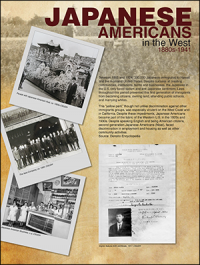
1media/Japanese America Before WWII.pngmedia/csudh_taz_142.jpg2016-12-12T09:53:54-08:00Steve Kutay2a3698b64111c4575df6dabf06e183b410497fa31407270Issei and Nisei in the Westimage_header3632802017-03-14T10:53:06-07:00Steve Kutay2a3698b64111c4575df6dabf06e183b410497fa3Japanese Americans in the West:Between 1885 and 1924, 380,000 Japanese immigrated to Hawaii and the mainland United States. Despite success at creating communities, institutions, farms and businesses, the Japanese in the U.S. only faced racism and anti-Japanese sentiment. Laws throughout this period prevented this first generation of immigrants (Issei) from becoming citizens, owning land, attending public schools, and marrying whites. Even second-generation Japanese Americans (Nisei), faced discrimination in employment and housing as well as in other community activities, although they spoke English and were American citizens. This “yellow peril,” though not unlike discrimination against other immigrant groups, was especially virulent in the West Coast. Despite these impediments, Japanese Americans became part of the fabric of the Western U.S. in the 1920s and 1930s.
1media/San Pedro Produce Growers Label.jpg2016-12-12T09:50:44-08:00Steve Kutay2a3698b64111c4575df6dabf06e183b410497fa3Work Life48gallery2017-03-14T11:00:32-07:00Steve Kutay2a3698b64111c4575df6dabf06e183b410497fa3
12016-12-21T14:32:15-08:00Before the War15Exhibit poster, "Japanese Americans in the West, 1880s - 1941" media/Japanese America Before WWII.pngplain2017-02-22T01:04:00-08:00