Feb 28
Vikingerne
Else Marie Pade
listen from Naxos library
Matriarchal maverick of alternative thinking in music and pioneer of free sonic expression, Else Marie Pade is an exceptional force in the history of electric sounds. As the first Danish composer of both concrete and electronic music, Pade's influence on the development of 20th century experimental musical movements can be clearly heard in this piece. Vikingerne (The Vikings) is a sonic exposition that resulted from a collaboration between Jens Henriksen and Pade in creating an educational film about Viking life. This piece is the final movement from the fourth segment of a group of compositions originating from the late 1950's, with Vikingerne having been completed in 1961.
Having originally been composed as a film score, Vikingerne maintains a cinematic soundscape throughout and draws its sonic inspiration from the film's visual elements. Sadly, none of the filmed material remains as it has been lost and only Pade's audio components remain. The Danish State Film Centre commissioned this film for educational settings, particularly schools. Aarhus, the city in Denmark where Pade hails from, played a vital role in the historical development of the Viking Age period and acted as an epicenter of Scandinavian culture during the European Middle Ages.
page 8 of the score:
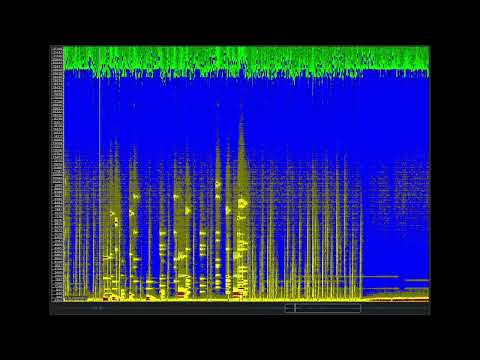
Using two different plug-ins from Sonic Visualizer; Kurtosis which represents impulsive noise exposure and Loudness which denotes dynamic intensity. A central theme to this composition is the overall low levels of volume and very soft dynamics.
Two other plug-ins from Sonic Visualizer; Spectral Flux which represents spectral changes in the signal and Spectral Spread which marks the deviation of amplitude distribution from the spectral 'centroid.' Centroid is the 'center of gravity' of the spectral range. Notice the relative consistency of the harmonic material present within the signal that changes in direct relation to dynamic shifts.
This page has paths:
- Anthony Cammarota - CEMA Anthony Cammarota