Message: strtolower(): Passing null to parameter #1 ($string) of type string is deprecated
Filename: core/MY_Controller.php
Line Number: 217
A PHP Error was encountered
Severity: 8192
Message: strtolower(): Passing null to parameter #1 ($string) of type string is deprecated
Filename: core/MY_Controller.php
Line Number: 217
A PHP Error was encountered
Severity: 8192
Message: strtolower(): Passing null to parameter #1 ($string) of type string is deprecated
Filename: core/MY_Controller.php
Line Number: 217
Post-Ottoman Middle East: The Mandate SystemThe Age of World War: World History 1914 - 1945Main MenuWorld Around 1914: GandhiThe World in the Era of Nationalism and Imperialism (1848-1914)The First World WarThe Long Russian Revolution (1917 – 1929)The Decline of the West? Europe from 1919 – 1929A New Middle East: The Rise of the Middle East State SystemChina Between Qing Collapse and WWIILatin America Between Boom and Bust (1911-1929)Africa Under Colonial Rule: Politics and Race from 1914‐1939The United States from The First World War to the Great DepressionThree Varieties of Radicalism in the 1930s: Nazi Germany, Stalinist Russia, and Imperial JapanThree Responses to Modernity: Ho Chi Minh, Ibn Saud and Getulio VargasThe Second World WarSeth Rogofff80e5958d0cba73d55b9580d63378b1ce661a4eb
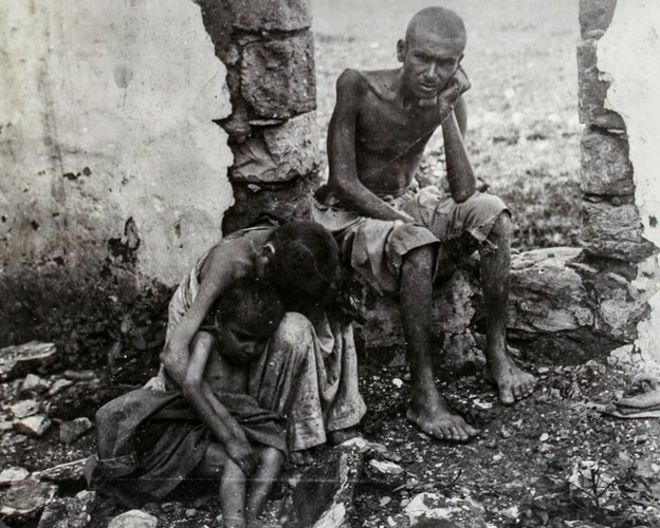
12015-05-31T06:55:07-07:00Introduction: The End of the Empire3text2015-06-13T12:12:58-07:00We have already discussed the devastating effects of the First World War on one of the European empires: Imperial Russia. We learned that the war placed enormous strain on both the military and the civilian population. Beyond the millions of casualties on the fronts with Austria and Germany, many more millions were cut off from vital sustenance. In a world of more complex agricultural connections and global commodities markets, the disruptions of the First World War were disastrous. Historians have long argued whether revolution would have come to Russia had the WWI not weakened it severely and undermined the legitimacy of its ruler and ruling elite. Could Imperial Russia have reformed and modernized? The same basic question could be posed to the Ottoman Empire, an empire centuries older than Imperial Russia and built on the idea of unified Muslim political rule in the tradition of the original caliphates. It is arguable that there was no zone more devastated during WWI than the Ottoman Empire and its neighbor Persia. From a population of 21 million, it is estimated that five million people died (including some 1.5 million Armenians). Eighty percent of these were civilian deaths, caused by agricultural disruption, blockade and famine. Deaths in Persia, a neutral state, reached the same proportions. Localized losses were even more extreme. In the area of Mount Lebanon, nearly half of the population fell to famine. Anger, of course, turned against the authorities in Istanbul. The legitimacy and the power of the Ottoman government collapsed. By the end of the war, most of the former Ottoman territory was in allied hands—and most controlled by the British. The meetings in Paris in 1919 would do much to create a new order in the Middle East and the Levant. A system of small Middle Eastern states was born. I hope you keep in mind as we work through the materials in this chapter how the state-creation process in the former Ottoman zone and in Persia relates or compares to the emergences of nation-states in Europe, Japan, and China. Part of studying history with a global scope is to see the world as both a set of localized phenomena AND as part of a unified whole.